Lansweeper automatically builds and continuously validates your hardware inventory, giving IT and Security teams the accurate foundation they need to manage, secure, and optimize the full hardware estate.

Complete Visibility
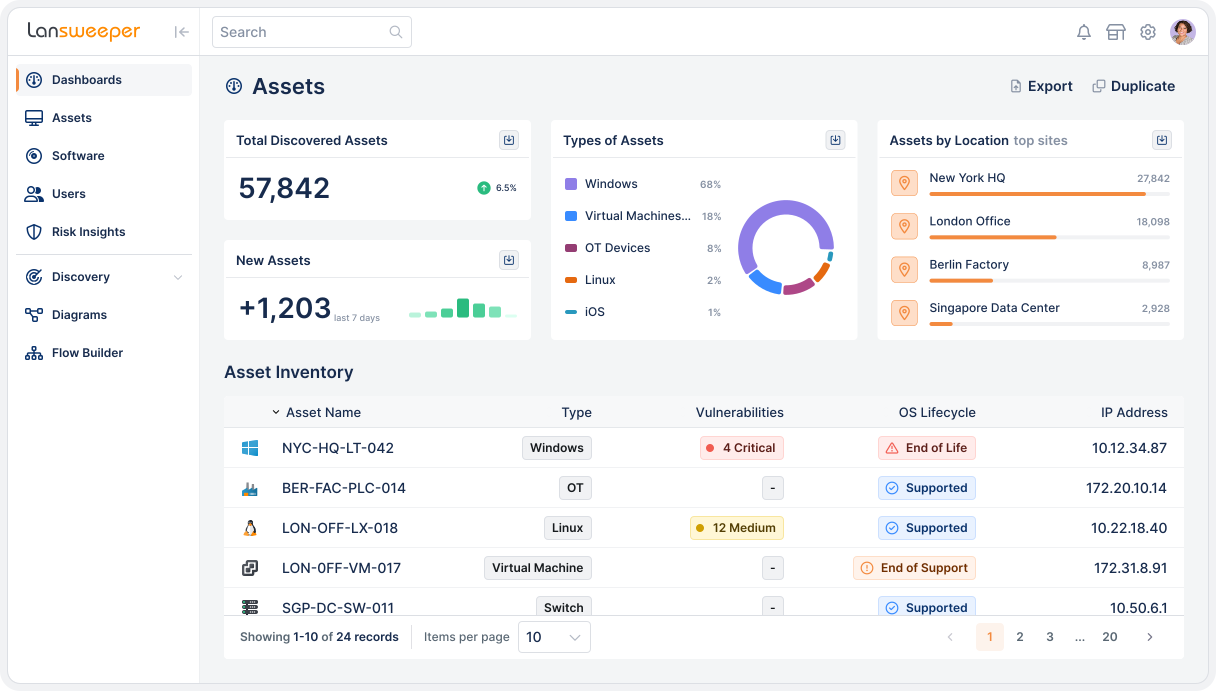
Lansweeper combines agentless and agent-based, active and passive discovery to identify every hardware asset across on-premises, cloud, and hybrid environments. Shadow IT, transient devices, and remote endpoints are all surfaced automatically. Lansweeper maintains a continuously validated hardware inventory without manual input or periodic reconciliation.
Every discovered asset feeds into a ready-to-run hardware inventory report, so IT can pull a complete, current list of every device without building it manually.

Lifecycle Tracking
Accurate lifecycle data across every device means upgrades and retirements are planned, not forced. Lansweeper tracks warranty status, usage, and EOL/EOS for every hardware asset, surfacing critical milestones before a missed refresh date becomes a security liability.
Risk & Compliance
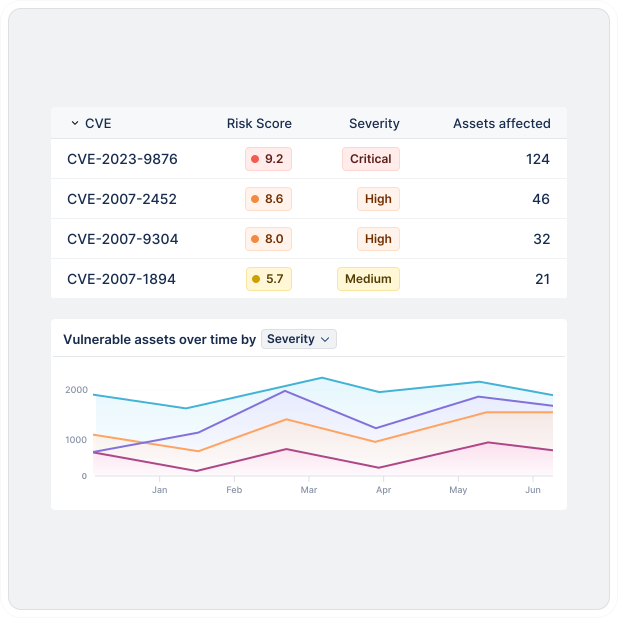
Outdated and unsupported hardware is among the most exploitable attack surfaces. Lansweeper identifies vulnerable, unauthorized, and EOL hardware, surfacing risks linked to missing patches and expired warranties before they create incidents.
“Lansweeper saves the university around £300,000 annually in IT spending, a critical advantage, given that central funding for government-run businesses in the UK is currently very tight.”

Financial Optimization
Underused devices, redundant assets, and untracked depreciation inflate hardware budgets silently. Lansweeper tracks utilization, depreciation, and TCO across the full hardware estate, giving IT the data needed to reclaim idle assets, avoid unnecessary purchases, and enter vendor negotiations backed by facts.

Orchestration
Lansweeper connects hardware asset data directly into the ITSM, CMDB, and ITAM platforms your teams already work in, keeping every connected tool current without manual exports or reconciliation overhead.
How it works
Discover every asset, understand what’s at risk, and push trusted data to the tools that take action.


Continuously discover and classify every asset across IT, OT, cloud, and IoT, including managed, unmanaged, and shadow assets without manual effort.
Normalize and apply context, vulnerability data, and lifecycle signals to assess risk, forecast spend, and surface optimization opportunities.
Deliver trusted asset intelligence to ITSM, CMDB, and security tools so actions are accurate, scoped, and prioritized.
INTEGRATIONS
Lansweeper feeds trusted, continuously updated asset intelligence into the tools that take action.








Explore Lansweeper for free.
No credit card required.
Hardware asset management (HAM) is the practice of tracking, managing, and optimizing physical IT assets, including desktops, laptops, servers, network devices, and peripherals, across their full lifecycle from procurement through retirement. Effective HAM gives IT and Security teams an accurate, audit-ready record of what the organization owns, where it is, and what state it’s in: the foundation for controlling costs, flagging EOL risk, and meeting compliance requirements without manual effort.
A hardware inventory is a complete, current record of every physical IT asset in an environment, including desktops, laptops, servers, network equipment, and peripherals, along with details like model, serial number, and location. It’s the foundational data set that hardware asset management is built on: you can’t manage, secure, or budget for hardware you haven’t accurately inventoried. Lansweeper builds this inventory automatically and keeps it current, rather than relying on a spreadsheet that goes stale the moment it’s exported.
Lansweeper discovers hardware assets automatically across on-premises, cloud, and hybrid environments, without requiring agents on every device. For each asset, it captures hardware specifications, serial numbers, OS and firmware versions, installed software, warranty status, and EOL/EOS dates, all updated continuously. IT teams get a trusted, always-current view of hardware state across the entire estate, with no manual data entry and no dependency on self-reported inventory.
Accurate hardware visibility reduces costs in three areas: it prevents unnecessary purchases by surfacing underutilized devices available for reallocation, eliminates redundant assets before they generate ongoing maintenance costs, and improves warranty and contract management by tracking coverage dates so teams can negotiate renewals proactively. Lansweeper’s hardware lifecycle tracking also identifies end-of-life assets before they become security incidents that carry remediation costs.
Hardware running end-of-life operating systems or firmware no longer receives security patches, making it a known vulnerability attackers can reliably target. Most organizations don’t know how many EOL devices are in their environment because hardware inventories are manually maintained and quickly go stale. Lansweeper tracks EOL and EOS status for hardware and software simultaneously, flagging assets approaching or past their support dates so IT and security teams can act before exposure becomes risk.
Lansweeper integrates with leading ITSM and CMDB platforms, including ServiceNow and Jira Service Management, to automatically populate and continuously enrich configuration item (CI) records with validated hardware data. This eliminates the manual reconciliation that causes most CMDB drift and ensures that incident, change, and problem management workflows are working from accurate, trusted asset data rather than a stale snapshot.