Turn security findings into a structured security remediation process, with clear ownership, context, and end-to-end tracking from identification to closure.
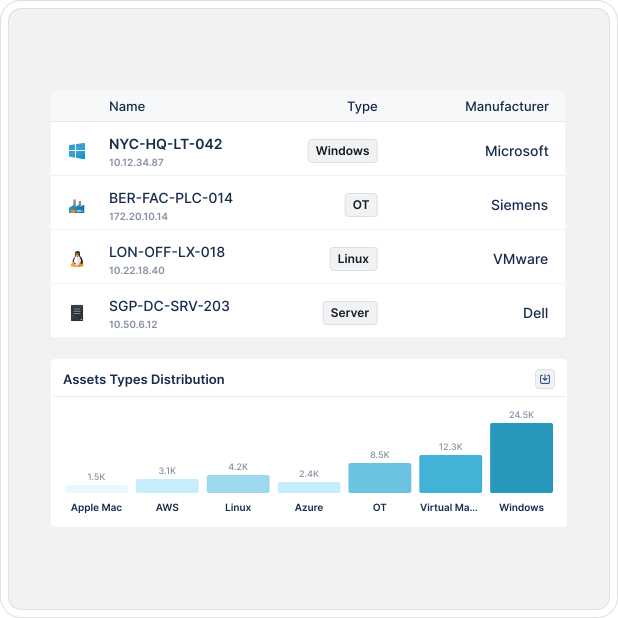
Built on Total Visibility
Remediation stalls when IT and Security work from different data. Lansweeper gives both teams a shared, continuously validated asset foundation so ownership is clear, asset context is accurate, and neither team wastes time reconciling conflicting inventories before acting. If your team is still working from incomplete or conflicting inventories, start with total visibility first.

Context-Driven Prioritization
A finding without context is just noise. Lansweeper automatically enriches every risk signal with asset ownership, software version, business relevance, and operational impact, so Security hands IT structured, prioritized work items that fit directly into execution workflows.

Workflow Alignment
Security work shouldn’t be ad-hoc. Make it an integral part of how IT operates. Lansweeper integrates findings directly into existing patching, change management, and ticketing systems. IT can address risk within its established cycles, reducing friction and keeping remediation on track.
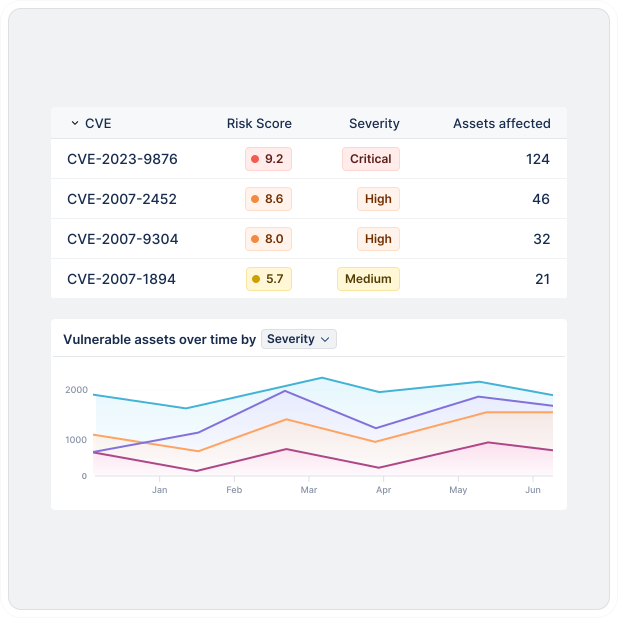
Measurable Progress
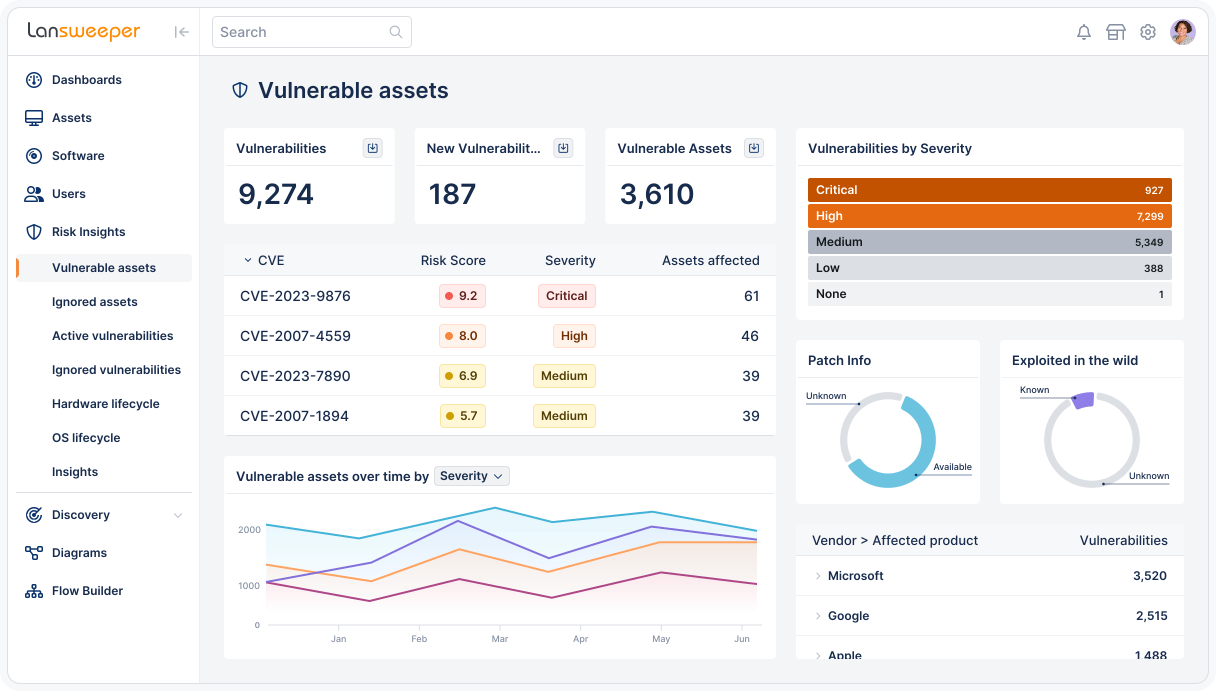
Knowing remediation happened isn’t enough. It needs to be visible, reportable, and defensible. Both teams gain end-to-end visibility into what has been identified, assigned, resolved, or remains open. Leadership gains clear reporting on exposure reduction. Audit conversations shift from manual cross-referencing to confident, data-backed answers. Track remediation SLAs by severity, so teams know exactly which findings are on schedule and which are at risk of missing their close date.

Orchestration
A critical vulnerability surfaces on a Friday afternoon. Instead of a Security analyst manually hunting for the right IT owner, Lansweeper triggers a structured workflow automatically, creating the ticket, notifying the asset owner, and initiating remediation without a single manual handoff. See how this plays out in a real environment in our breakdown of closing the vulnerability remediation gap.
How it works
Discover every asset, understand what’s at risk, and push trusted data to the tools that take action.


Continuously discover and classify every asset across IT, OT, cloud, and IoT, including managed, unmanaged, and shadow assets without manual effort.
Normalize and apply context, vulnerability data, and lifecycle signals to assess risk, forecast spend, and surface optimization opportunities.
Deliver trusted asset intelligence to ITSM, CMDB, and security tools so actions are accurate, scoped, and prioritized.
INTEGRATIONS
Lansweeper feeds trusted, continuously updated asset intelligence into the tools that take action.






Explore Lansweeper for free.
No credit card required.
A security remediation plan is a documented process for turning identified security risks into completed IT fixes, with clear ownership, priority, and a tracked timeline from discovery to closure. A strong plan defines who owns each finding, why it matters right now, and what “done” looks like. Without one, Security and IT often work from different lists and different priorities, and fixes stall in the handoff. Lansweeper gives both teams a shared, continuously validated foundation, so a remediation plan can be built on facts both sides trust.
Most security remediation processes break down at the handoff, when Security passes a finding to IT without the ownership, context, or priority IT needs to act on it. IT then has to track down who owns the affected asset, confirm why the finding matters, and manually create a ticket, all before any fix work starts. That delay is where remediation stalls and risk sits open longest, a gap we cover in detail in how IT and Security can close the vulnerability remediation gap. A shared, continuously validated asset foundation removes that reconciliation step, so findings move straight into IT’s existing ticketing and patching workflows with the context already attached.
Lansweeper reduces remediation delays by enriching every finding with asset ownership, business context, and risk data before it reaches IT, so tickets arrive ready to act on instead of needing translation first. Findings route directly into the patching, change, and ticketing systems IT already uses, and each item can be tracked against a remediation SLA by severity. That structure replaces manual handoffs with a defined process, and teams can see immediately which items are on schedule and which are at risk of missing their close date.
Lansweeper creates accountability by giving IT and Security a single, continuously validated view of every finding and its current status, so ownership cannot get lost between teams. Every step of the security remediation process, from identification to assignment to closure, is visible to both sides at once. Neither team can quietly drop a finding, because both are working from the same record rather than separate spreadsheets or ticket queues. That shared visibility is what turns remediation from an ad hoc effort into a defensible, repeatable process leadership can rely on.
Yes, a documented remediation plan gives auditors clear evidence of how risks are identified, assigned, and closed, which most compliance frameworks require. Standards including NIS 2, ISO 27001, and SOC 2 expect proof that security findings are tracked through to resolution, not just detected. Lansweeper keeps a continuously validated record of every finding’s status, so audit conversations rely on real data instead of manual cross-referencing. Leadership and auditors both get a defensible, current picture of what is open, what is resolved, and how long each fix took.
Setting up a security remediation plan with Lansweeper starts with connecting your existing asset and ticketing sources, since the plan only works if ownership and context are accurate from day one. Lansweeper then enriches incoming findings with asset ownership, lifecycle, and risk data, and routes them into the patching, change, and ticketing workflows IT already runs. Most teams can have findings flowing into structured tickets within days, not months, because the process builds on infrastructure already in place rather than replacing it. From there, remediation SLAs and reporting are ready to track from the first finding onward.
Not all findings carry the same urgency. Lansweeper enriches risk signals with asset context, business relevance, exploitability, and operational impact. This gives both teams a shared, prioritized view of what matters most. Security and IT align on the same list, rather than arguing about whose criteria take precedence.
Yes. Lansweeper tracks every finding from identification through closure, giving teams continuous visibility into what’s open, in progress, or resolved. Leadership gets clear, accurate reporting on exposure reduction, and audit conversations are backed by data rather than reconstructed from memory.