


IT organizations don’t lack the ability to find vulnerabilities. Today’s scanners can identify thousands of security weaknesses across endpoints, servers, and cloud environments every week.
But what happens once those vulnerabilities are discovered? Many of them go unresolved because no one can answer a simple question: Who owns the asset?
That uncertainty doesn’t just create operational friction. It can delay remediation and stretch limited engineering resources, and require a lot of explaining to executive leadership why critical vulnerabilities are still open. In some cases, critical vulnerabilities can’t even be assigned, so they end up languishing in backlogs while the organization is exposed.
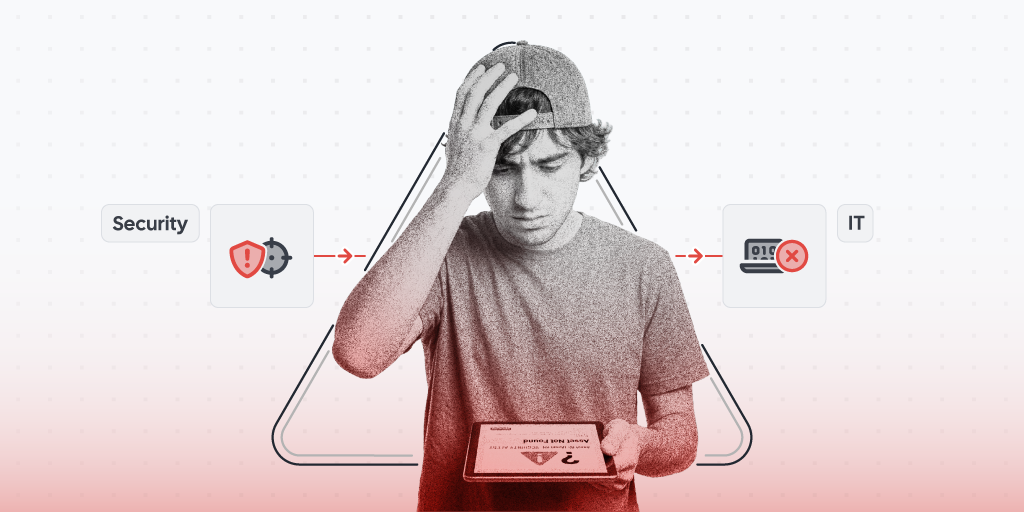
So, who is actually responsible for patch remediation: Security or IT? The answer is both. Security identifies and prioritizes vulnerabilities, while IT deploys patches and manages production systems.
But shared accountability only works when both teams are working from the same accurate understanding of the assets they’re responsible for. Unfortunately, ownership is often ambiguous in modern IT environments, and this blog explores how to fix that.
Ownership ambiguity is inevitable in a constantly changing IT environment, because assets rarely stay with the same team throughout their lifecycle. As IT environments evolve, infrastructure may move to the cloud. Organizational changes such as mergers and staff turnover leave ownership records outdated or incomplete.
Even long-running servers and business applications can outlive their original owners or change between departments, without any traceability or documentation.
To complicate matters, patch remediation has never belonged to a single team. Security identifies vulnerabilities, prioritizes risk and determines what needs attention. IT tests patches, schedules maintenance and deploys changes to production systems. Neither group can complete the process without the other, and the handoff fails when a vulnerability is tied to an asset that no one can confidently identify or own.
Imagine Security sends IT a ticket that says, “Patch PRODWEB-042.” Before anyone can schedule the work in the patch management system, IT has to answer a series of basic questions:
Answering those questions is a prerequisite for initiating a production change safely and efficiently.
But vulnerability scanners typically identify the affected asset without providing the operational context IT needs. They may reassign the ticket back to Security for clarification, or it sits unaddressed until someone is able to manually track down the required information. IT engineers spend valuable time investigating ownership instead of remediating vulnerabilities, causing patch SLAs to slip.
For Security, unresolved ownership makes it difficult to measure progress or demonstrate meaningful risk reduction. Instead of reporting how many critical vulnerabilities were remediated or how much exposure was eliminated, all they can report on is how many vulnerabilities they found or assigned.
True accountability can’t exist until ownership is clear. Until then, remediation backlogs keep growing and patch SLAs are harder to meet. What’s more, Security and IT leaders may find it hard to demonstrate that they’re actually reducing cyber risk.
Security Risk Remediation
See what a shared view of your assets makes possible.
In addition to accelerating remediation, clear asset ownership improves the quality of every security decision that follows. Why? Because when ownership is missing, Security teams lose the context needed to prioritize vulnerabilities based on business impact rather than technical severity alone.
For IT leaders, that context makes it possible to allocate scarce remediation resources where they’ll have the most impact.
For example, a critical vulnerability affecting a customer-facing application carries a very different level of organizational risk than the same vulnerability on a retired development server.
Without knowing who owns the asset, how it’s used, or which business services depend on it, it’s difficult to determine which findings demand immediate attention and which can be addressed through routine maintenance.
Increasingly, CISOs, CIOs, and IT leaders are expected to demonstrate measurable progress in reducing cyber risk to executive leadership and auditors. Reporting that thousands of vulnerabilities were discovered offers minimal insight into the organization’s actual security posture.
Stakeholders want to know which critical assets are exposed and whether remediation efforts are underway to reduce business risk. They need to understand if additional investment or resources are needed, as well. All of this depends on accurate asset ownership and reliable operational context.
For IT, ownership clarity removes uncertainty from the remediation process. Teams spend less time investigating who should approve changes or coordinate maintenance windows and more time deploying patches that reduce risk.
Instead of reacting to incomplete tickets, they can prioritize remediation based on both technical urgency and business impact, which helps shorten remediation time and make better use of engineering resources. Plus, they’ll have more confidence when reporting remediation progress to company leadership.
Asset ownership is the foundation for effective vulnerability and risk management. When organizations understand who owns each asset and why it matters to the business, they can make faster, more informed remediation decisions and clearly demonstrate the risk they’ve eliminated.
In organizations that implement mature vulnerability management, the right vulnerability management tools pave the path to rapid remediation long before the first scan runs. The key is having access to accurate, continuously updated asset intelligence at all times.
Maintaining a single source of truth about your IT estate eliminates the need to scramble for answers, since you already know who owns what assets and the critical dependencies of each impacted system.
When that context is readily available, vulnerability findings arrive from Security with the information IT needs to take immediate action. It’s already clear who is responsible, how critical the asset is and what systems could be affected by a change.
Instead of launching an ownership investigation, IT can move directly into remediation, reducing delays and shortening your organization’s exposure window.
That kind of efficiency doesn’t happen by accident. It depends on having a platform that provides the asset intelligence needed to turn findings into actionable remediation work. This is what Lansweeper delivers. Specifically, look for a platform that can:
Ultimately, Lansweeper doesn’t just identify risk. It provides the trusted asset intelligence that makes accountability and remediation possible. IT managers can prioritize limited resources effectively and answer executive questions about why vulnerabilities remain open, or demonstrate that remediation is already underway.
Shared accountability depends on a shared understanding of the technology asset environment. That’s why asset intelligence is the foundation of effective vulnerability management.
Lansweeper makes understanding who is responsible for patch management possible by continuously discovering assets and enriching them with operational context. By maintaining accurate inventories, trusted asset data, and consistent asset identifiers, Lansweeper gives both Security and IT a common view of the environment, eliminating confusion and accelerating remediation.
With Lansweeper, vulnerability findings from Security contain meaningful context, enabling IT to quickly identify the responsible owner, understand the asset’s role in the business, and prioritize remediation accordingly. Meanwhile, Security can be confident that findings are routed to the right teams.
The result is better outcomes for both groups:
With trusted asset intelligence providing accurate ownership and operational context, remediation moves faster, and Security and IT can focus on reducing risk instead of debating responsibility.
Security Risk Remediation
See what a shared view of your assets makes possible.
Asset ownership is the process of identifying the person or team responsible for maintaining, securing, and approving changes to an IT asset. In vulnerability management, ownership ensures security findings are assigned to the right teams or individuals to investigate and verify. If ownership is unclear, vulnerabilities may remain unresolved, because no one has the authority or operational context to take action.
Asset ownership gets fuzzy as IT environments evolve through mergers, reorganizations, employee turnover, or other events, making ownership of rapidly provisioned infrastructure ambiguous. In this scenario, while vulnerability findings may identify an affected asset, it’s unclear which team is responsible for maintaining it, and that delays remediation.
It’s critical to maintain a complete, continuously updated inventory of all your hardware, software, and cloud resources, enriched with operational context such as business and technical owners, department, lifecycle status, criticality and dependencies. When vulnerability findings can be connected with this information, it’s much easier to assign work to the right teams and track progress towards remediation.
Both! It’s a shared responsibility. Security teams identify vulnerabilities, assess risk, and prioritize remediation, while IT teams test, schedule, and deploy patches to production systems. Effective remediation depends on both teams working together and using the same trusted asset data. Only then can they assign, prioritize, and resolve issues without delay. Clear ownership also gives IT managers visibility into remediation progress and makes it easier to demonstrate accountability to executive leadership.
The NIS2 Directive requires organizations to manage cybersecurity risk across critical assets, DORA requires financial institutions to maintain visibility into ICT assets and dependencies. The CIS Critical Security Controls recommend actively managing enterprise assets and software inventories as foundational security practices. Clear asset ownership helps organizations demonstrate accountability and be ready for audits across these frameworks.
Start with continuous asset discovery and accurate inventory management. You should define both business and technical owners for critical assets and maintain ownership information as environments change. Additionally, be sure to enrich asset records with context such as lifecycle status and dependencies.
When ownership data is current, vulnerability findings can be routed directly to the appropriate teams, reducing investigation time and accelerating remediation. This also provides leadership with more accurate remediation metrics, and reduces the time teams spend investigating ownership instead of resolving vulnerabilities.
In high-performing organizations, Security teams are responsible for discovering vulnerabilities, prioritizing risk, and measuring remediation progress, while IT Operations owns patch testing, deployment, and production stability. Industry reports such as the Verizon Data Breach Investigations Report (DBIR) consistently highlight the importance of reducing the time between vulnerability discovery and remediation, underscoring the need for close collaboration between both teams.
Determining risk priority should use a shared risk-based process. Security provides the risk assessment based on exploitability, severity, and threat intelligence while IT evaluates operational considerations such as business impact and system dependencies. This helps to ensure your organization reduces cyber risk without introducing unnecessary operational disruption.
Blog

Explore the full platform, free for 14 days.
No credit card required.