Give IT and Security one continuously validated view of every device and identity, so access and segmentation policies enforce on facts and scale without growing exception lists.

Unified Context
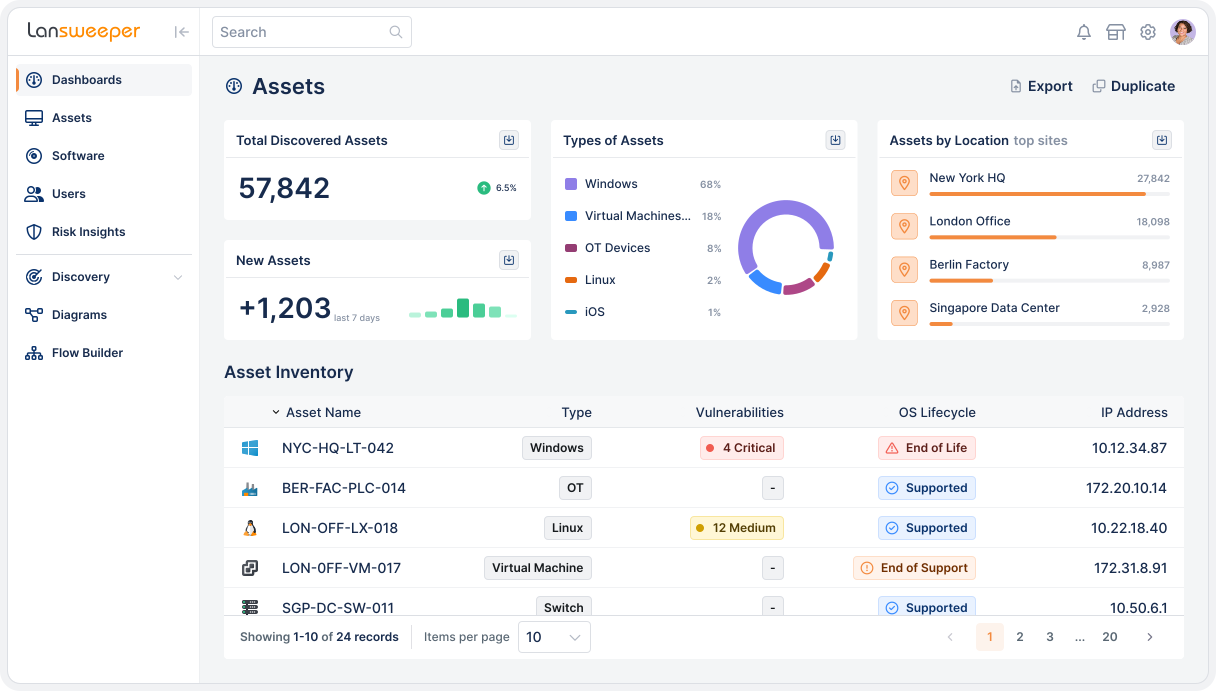
When different tools label the same device differently, policies break at the edge. Lansweeper discovers, normalizes, and classifies assets across environments and discovery sources, so every enforcement tool works from the same verified foundation.

Verified Risk Posture
Policies that ignore device health make least-privilege impossible. Lansweeper enriches every asset with vulnerability insights, patch status, lifecycle, and configuration context, so access and segmentation rules reflect actual risk posture, updated continuously rather than at the last audit.

Controlled Rollout
Bad data forces organizations to choose between enforcing policy and causing disruption. When the asset data is accurate and continuously validated, your teams can enable and enforce segmentation and Zero Trust controls step by step. False positives drop, and cascading exceptions stop before they start.

Orchestration
Lansweeper feeds normalized asset context into NAC, IAM, SASE, and SIEM platforms through native integrations, webhooks, and open APIs. Flow Builder triggers automated responses when asset state changes. Every policy decision stays traceable with audit trails that don’t require manual reconstruction.
How it works
Discover every asset, understand what’s at risk, and push trusted data to the tools that take action.


Continuously discover and classify every asset across IT, OT, cloud, and IoT, including managed, unmanaged, and shadow assets without manual effort.
Normalize and apply context, vulnerability data, and lifecycle signals to assess risk, forecast spend, and surface optimization opportunities.
Deliver trusted asset intelligence to ITSM, CMDB, and security tools so actions are accurate, scoped, and prioritized.
INTEGRATIONS
Lansweeper feeds trusted, continuously updated asset intelligence into the tools that take action.







Explore Lansweeper for free.
No credit card required.
Zero trust segmentation divides a network into small, isolated zones and allows access between them only after verifying the identity, device, and context of every request. It limits lateral movement, so a compromised device can’t reach systems it has no reason to touch.
Segmentation policies are only as reliable as the asset data behind them. If a device is misclassified or missing from the inventory, the policy enforces on the wrong facts. Lansweeper gives IT and Security a shared, continuously validated view of every asset, so segmentation rules reflect what’s actually on the network.
Most zero trust initiatives stall because the asset and identity data underneath them is incomplete, inconsistent, or out of date. When different tools classify the same device differently, policies fail at the edge, and teams respond with exceptions that become permanent.
Unmanaged devices, OT, IoT, and shadow IT add assets no policy covers at all. 73% of cybersecurity leaders have seen incidents caused by unknown assets (Trend Micro). Progress resumes when IT and Security work from one trusted, continuously validated inventory that every enforcement tool can rely on.
Lansweeper discovers, classifies, and enriches every asset across IT, OT, IoT, and cloud, then shares that context with the tools that enforce zero trust. Agentless discovery covers managed and unmanaged devices, and each asset is enriched with vulnerability, patch, lifecycle, and configuration data. Native integrations, webhooks, and open APIs connect that intelligence to:
• Network access control (NAC) and identity and access management (IAM) platforms
• Secure Access Service Edge (SASE) and microsegmentation tools
• Security information and event management (SIEM) platforms and Flow Builder workflows
IT and Security define, enforce, and audit access policies from the same trusted foundation.
Device trust is the zero trust principle that every device must prove it is known, healthy, and compliant before it gets access. Identity alone isn’t enough: a valid user on a vulnerable or unmanaged device is still a risk. Device trust starts with recognizing every device on the network, which is why device identity is the foundation of zero trust network access.
Device trust decisions depend on current data about each device’s classification, patch level, vulnerabilities, and owner. Lansweeper keeps that data continuously validated and benchmarks it against collective intelligence from 175M+ devices across 30,000+ environments, so access decisions reflect each device’s real state, not its last scan.
No. Lansweeper is the Cyber Asset Intelligence Platform that NAC, microsegmentation, and SASE tools enforce on, not a replacement for them. Those tools decide who and what gets access. Lansweeper makes sure those decisions are based on a complete, correctly classified, continuously validated inventory.
Because Lansweeper isn’t tied to a single control plane, the same trusted asset data supports every enforcement tool in the stack. That keeps policies consistent when organizations run more than one, and gives IT and Security a shared, defensible record of what each policy covers.
Both the CISA Zero Trust Maturity Model and the NSA Zero Trust Implementation Guideline Primer treat device visibility as foundational. CISA’s Optimal stage for the Devices pillar calls for continuous monitoring and validation of device posture across on-premises, cloud, and remote environments.
The NSA guidance spans 91 activities across seven pillars, and every pillar depends on knowing which devices exist. Lansweeper provides continuously updated device, software, configuration, and vulnerability records, with audit-ready reporting that helps IT and Security demonstrate maturity progress to auditors and leadership.
Start with a complete, continuously validated inventory, because every zero trust pillar depends on it. A practical sequence:
1. Discover every asset, including unmanaged, OT, IoT, and cloud devices
2. Normalize classification so every tool labels devices the same way
3. Enrich assets with risk, vulnerability, and lifecycle context
4. Connect that data to your NAC, IAM, and segmentation tools
5. Roll out policies in stages and track exceptions until they shrink
Lansweeper offers a free trial, so IT and Security can measure visibility gaps before a rollout.