Vulnerability assessments are a cornerstone of any strong cybersecurity strategy. They provide the insight needed to uncover weaknesses before attackers can exploit them, helping organizations reduce risk and strengthen resilience. In this post, we’ll explore why vulnerability assessments are so critical and share best practices for making them an integral part of your cybersecurity risk management approach.
White Paper
Why visibility is your first — and most critical — line of defense.
A vulnerability assessment is essentially a thorough check-up for your IT environment. It systematically examines networks, systems, and applications to uncover security weaknesses, such as outdated software, incorrect configurations, or obsolete security protocols, that could be exploited by malicious actors.
The goal is straightforward: detect and address vulnerabilities before they lead to harm. Beyond identifying potential risks, a well-executed assessment provides clear, actionable guidance to strengthen defenses and reduce the likelihood of costly security incidents.
Research from the Ponemon Institute shows that 60% of organizations have suffered data breaches that could have been avoided by patching known vulnerabilities. This highlights why vulnerability assessments are essential in modern cybersecurity.
By systematically identifying and ranking security weaknesses, these assessments give you the insight you need to take action before attackers can exploit them. Addressing issues, such as outdated software, misconfigurations, or insecure settings, early on dramatically lowers the risk of a successful cyberattack.
Vulnerability assessments are critical because they provide you with a clear understanding of your security posture and help prioritize remediation efforts based on risk severity. Thanks to these proactive assessments you can address security gaps before attackers can exploit them, significantly reducing the likelihood of successful cyberattacks.
For example, a vulnerability assessment might reveal that a critical business application is running outdated software with known exploits, allowing you to patch this high-risk vulnerability immediately.
According to the National Institute of Standards and Technology (NIST), organizations that regularly conduct vulnerability assessments can significantly reduce their attack surface and lower the risk of data breaches.
Key benefits include:
Regular vulnerability assessments mitigate cybersecurity risks by providing continuous visibility into security weaknesses and enabling prioritized remediation based on threat severity and business impact. This systematic approach ensures that the most dangerous vulnerabilities are addressed first, optimizing resource allocation in security-constrained environments.
The mitigation process works through:
An effective vulnerability assessment involves three critical steps: asset identification, systematic scanning, and risk-based prioritization. Following this structured approach ensures comprehensive coverage and efficient resource allocation.
Start by creating a comprehensive inventory of all IT assets, including hardware, software, and network components to set the stage for a more focused assessment. This foundational step involves reviewing known security issues that could be exploited buy attackers such as:
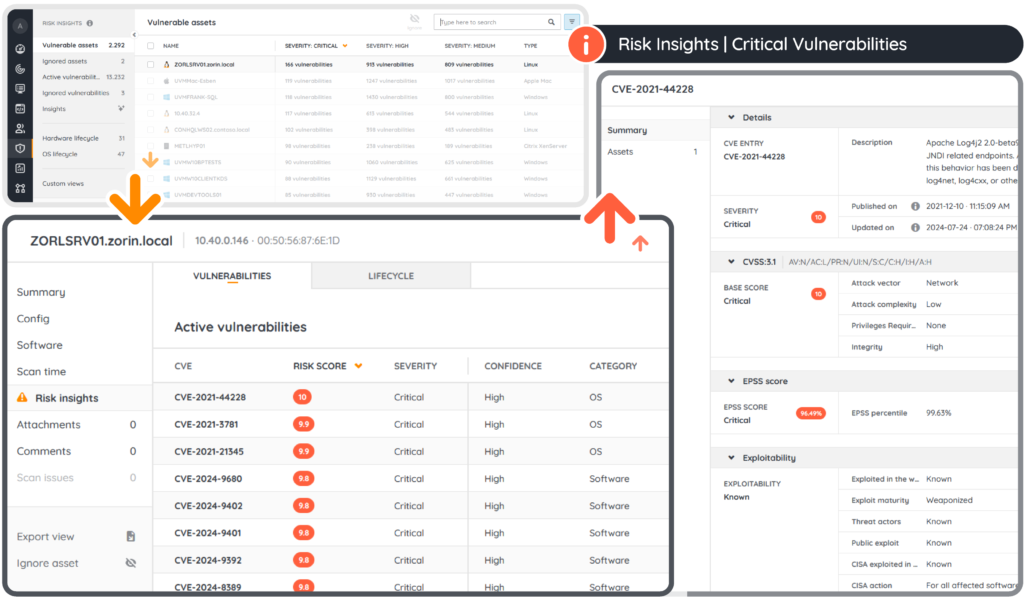
Use automated vulnerability scanning tools to systematically examine networks, systems, and applications for known security weaknesses. Tools like Lansweeper’s Risk Insights provide detailed reports that help assess the nature and severity of identified vulnerabilities.
The scanning and assessment process should cover:
Prioritize vulnerabilities based on three key factors: severity level, potential business impact, and exploitability in your environment. Focus first on high-priority vulnerabilities affecting critical systems or those with known active exploits.
Use this prioritization framework:
This approach allows you to allocate resources effectively and address the most dangerous vulnerabilities first, reducing the risk of successful attacks.
Vulnerability assessments help identify specific weaknesses in systems, applications, and networks that could be exploited by attackers, which are then analyzed in the context of the organization’s broader risk landscape. By linking vulnerability assessment to risk management security teams can evaluate the potential impact of each vulnerability on critical assets and operations, providing a more holistic view of the risks the organization faces.
With vulnerability assessment data on-hand, your team can:
Effective vulnerability management requires implementing seven key practices that create a comprehensive security framework. These practices work together to minimize exposure windows and maintain strong security posture.
Select a vulnerability assessment tool that provides comprehensive coverage of your IT environment while integrating seamlessly with existing security infrastructure. Consider factors like scalability, ease of use, reporting capabilities and support quality when making your decision.
Essential features to evaluate:
Lansweeper helps organizations with vulnerability assessment and management by providing comprehensive visibility into their entire IT environment. It automatically discovers and inventories all hardware, software, and network assets, enabling security teams to identify vulnerabilities such as outdated software, unpatched systems, and misconfigurations.
Lansweeper’s Risk Insights gather data from the VulnCheck, CISA, and MSRC databases to discover known vulnerabilities that are a threat your network and give you a comprehensive list of at-risk assets so you can take immediate action.
By integrating with various security tools and offering detailed reporting and analysis, Lansweeper streamlines the process of prioritizing and remediating vulnerabilities based on risk levels, ensuring a proactive approach to cybersecurity.
Lansweeper Demo
Sit back and dive into the Lansweeper interface & core capabilities to learn how Lansweeper can help your team thrive.
Vulnerability assessment identifies and catalogs security weaknesses, while penetration testing actively exploits these vulnerabilities to demonstrate potential impact. Vulnerability assessments provide broad coverage for ongoing monitoring, whereas penetration testing offers deep, targeted analysis of specific attack scenarios.
Organizations should perform continuous vulnerability scanning with formal assessments conducted monthly or quarterly depending on their risk profile. High-risk environments or those handling sensitive data may require more frequent assessments.
The most commonly identified vulnerabilities include unpatched software, misconfigurations, weak authentication mechanisms, and exposed services. According to industry reports, these four categories account for over 80% of successful cyberattacks.
A comprehensive vulnerability assessment typically takes 1-4 weeks depending on the organization’s size and complexity. Automated scanning can be completed within hours, but thorough analysis, prioritization, and reporting require additional time.
Major compliance frameworks including PCI DSS, HIPAA, SOX, and ISO 27001 require regular vulnerability assessments. Specific requirements vary by regulation, but most mandate quarterly assessments at minimum.
Blog
Explore Lansweeper for free.
No credit card required.