Over the past few years, organizations have faced an ever-growing range of cyber threats. Effective policies for risk analysis and vulnerability management have become an essential part of any security strategy. By systematically identifying weaknesses within an organization’s systems and infrastructure, vulnerability management can mitigate the likelihood and impact of security breaches. A risk-based approach allows you to prioritize the vulnerabilities that pose the greatest threat to your business operations, ensuring resources are focused where they matter most.
Lansweeper’s powerful discovery capabilities and Risk Insights provide a strong foundation for risk analysis and vulnerability management. They also strengthen information system security by uncovering misconfigurations and hidden risks before attackers can exploit them.
White Paper
Why visibility is your first — and most critical — line of defense.
Simply put, risk-based vulnerability management is the practice of spotting weaknesses in your IT
systems, and then prioritizing and mitigating them based on the actual risk they pose to your business operations. Unlike traditional vulnerability management, which only considers severity ratings like CVSS scores, a risk-based approach factors in business context, asset criticality, and potential
impact.
For example, a “critical” vulnerability on a test server may matter less than a “medium” vulnerability on a production server that stores sensitive customer data.
Many security frameworks, like the NIS 2 Directive (Article 21) for example, call for effective policies for risk analysis and information system security. Adopting a risk-based approach to vulnerability management is one of the most practical ways you’ll meet these requirements while strengthening your defenses.
Vulnerability management is a vital part of any cybersecurity strategy. It consists of systematically identifying, assessing, prioritizing, and mitigating vulnerabilities in software, systems, and networks. This enhances your security posture in several ways:
Proper risk and vulnerability management helps organizations avoid potential threats by proactively identifying weaknesses before attackers can take advantage. Regularly assessing your IT infrastructure for vulnerabilities enables businesses to detect vulnerabilities promptly, reducing the window of opportunity for cyber attackers. Based on the severity of each vulnerability, you can prioritize your remediation efforts and allocate resources accordingly.
When taking a risk-based approach to threat and vulnerability management, instead of treating all vulnerabilities equally, you prioritize your response based on these 3 criteria:
Risk-based vulnerability assessment does not rely only on industry standards (like a CVSS score) to determine which vulnerabilities are the biggest threat. Instead, it also takes into account how the vulnerability affects your organization. That way, security teams can prioritize remediation efforts where they matter most.
It is important to keep in mind the difference between risk and vulnerability.
For example:
Understanding this distinction is the foundation of risk-based vulnerability management.
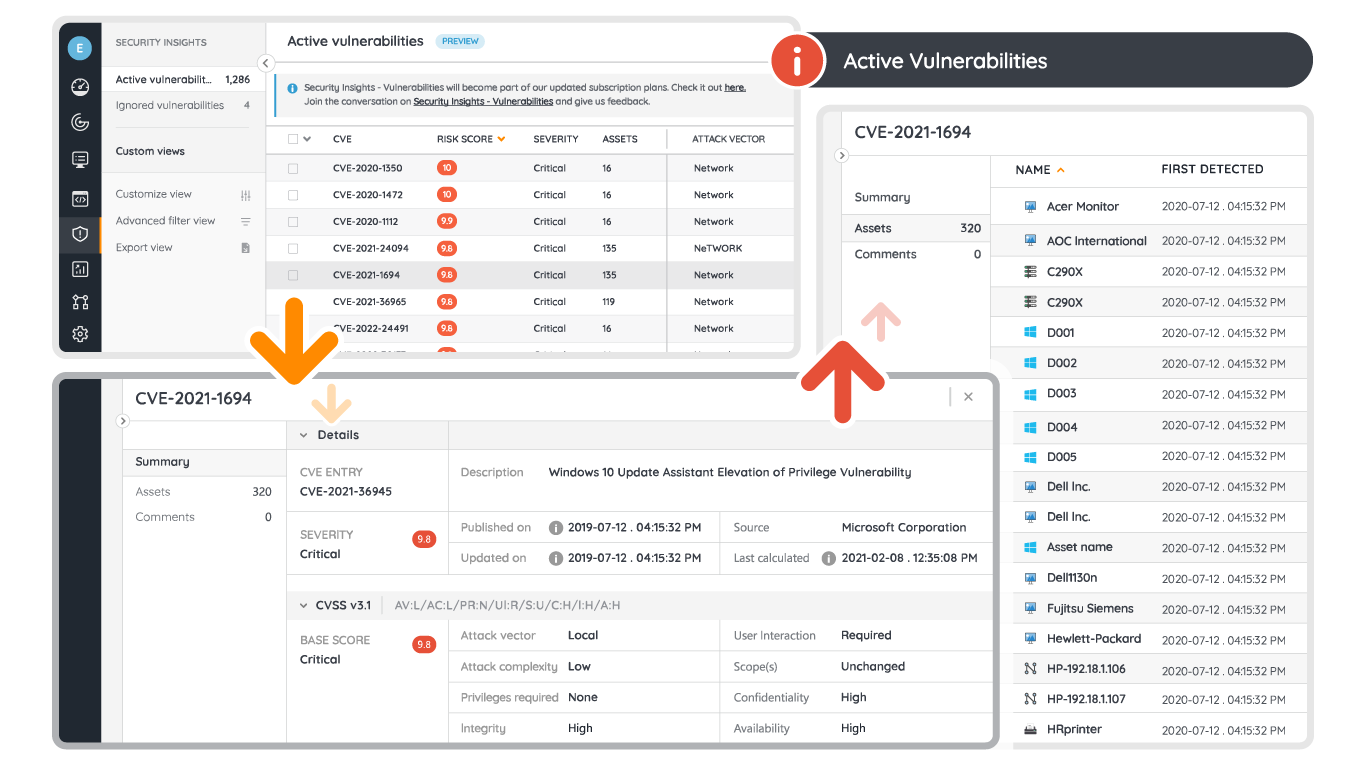
Lansweeper’s unrivaled asset discovery capabilities can give you an edge in every step of the vulnerability management process.
Some of the most common — and most avoidable — security issues stem from simple misconfigurations. Think of them like leaving doors inside your building unlocked. Once attackers make it into the building, these gaps make it easier for them to move around laterally and cause more damage. And yet, these issues are often overlooked.
Common misconfigurations Lansweeper detects include:
By closing these gaps, you reduce the attack surface and minimize the potential impact of a breach.
Risk analysis is an excellent place to start, whether you’re aiming for compliance with security frameworks or simply strengthening your overall cybersecurity posture. Vulnerability management plays a critical role in this process, offering a structured way to identify and address weaknesses in your IT environment, reduce your attack surface, and minimize the risk of security breaches.
By adopting a proactive, risk-based approach, organizations can stay ahead of evolving threats and ensure their defenses remain resilient. Ultimately, effective vulnerability management is not just about fixing problems as they arise, but about building a sustainable strategy that supports long-term security and business continuity.
Lansweeper Demo
Sit back and dive into the Lansweeper interface & core capabilities to learn how Lansweeper can help your team thrive.
Patch management is about keeping your software up to date by applying the latest updates and security patches. Vulnerability management goes further — it’s a
continuous process of finding weaknesses, understanding how risky they are, prioritizing fixes, and taking action. Sometimes the solution is a patch, but other times it could mean changing configurations, tightening access controls, or even retiring outdated systems.
Best practice suggests scanning at least once a month, but the right frequency depends on your industry and risk profile. Organizations that handle sensitive financial or healthcare data often scan weekly or even daily. The key is consistency. Scanning regularly reduces the window of opportunity for attackers to exploit unpatched vulnerabilities.
Not exactly. Lansweeper isn’t a traditional vulnerability scanner. Instead, it’s an asset discovery and risk insights platform that gives you the full picture of your IT environment. It integrates vulnerability data (from sources like VulnCheck and MSRC) with your asset inventory, showing which systems are at risk and helping you prioritize fixes. Many organizations use Lansweeper alongside their existing scanners to add essential context.
Traditional vulnerability management often relies heavily on severity scores (like CVSS) without considering your unique business context. A risk-based approach looks at the actual impact on your systems and operations. This means you’re not wasting resources chasing low-impact issues while critical risks remain unaddressed.
Yes. Frameworks such as NIS 2, ISO 27001, HIPAA, and SOC 2 all require organizations to manage vulnerabilities effectively. A risk-based approach helps
demonstrate that you’re not only finding weaknesses but also prioritizing remediation in a structured, business-aware way. This makes audits easier and strengthens your overall compliance posture.
Blog
Explore Lansweeper for free.
No credit card required.