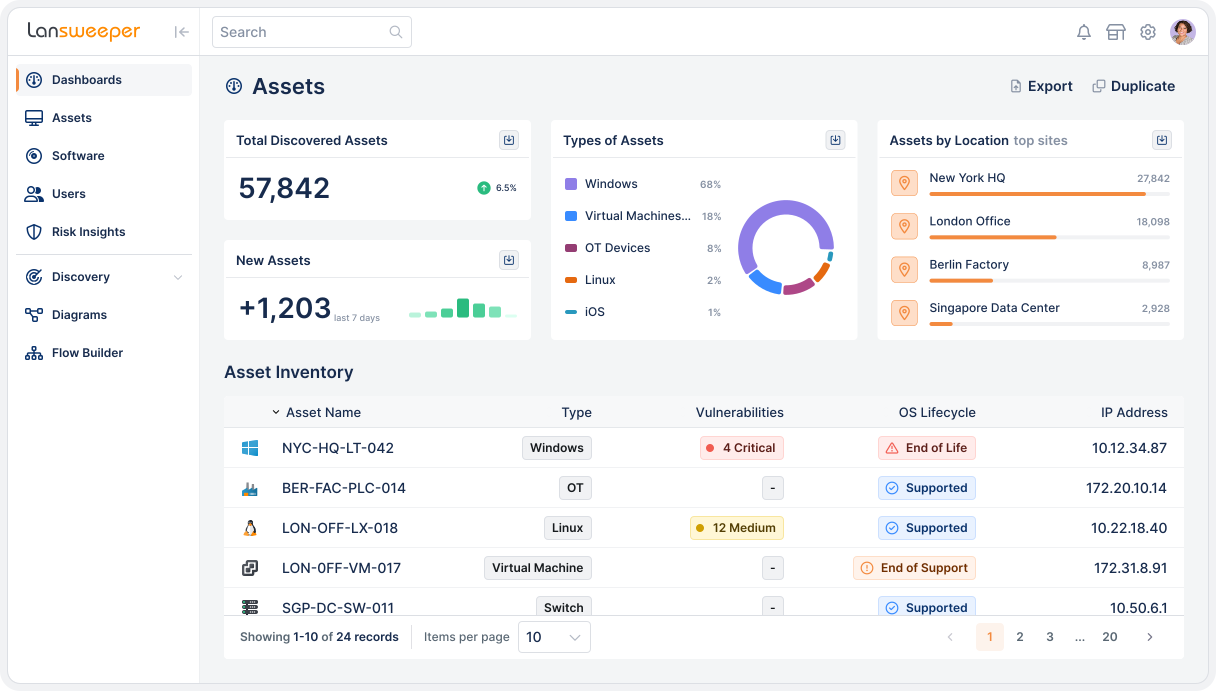
A CMDB is only as useful as the data inside it. Lansweeper continuously discovers and enriches every asset record, improving your CMDB data quality with accurate, complete, and trusted asset reconciliation.

Trusted CMDB Foundation
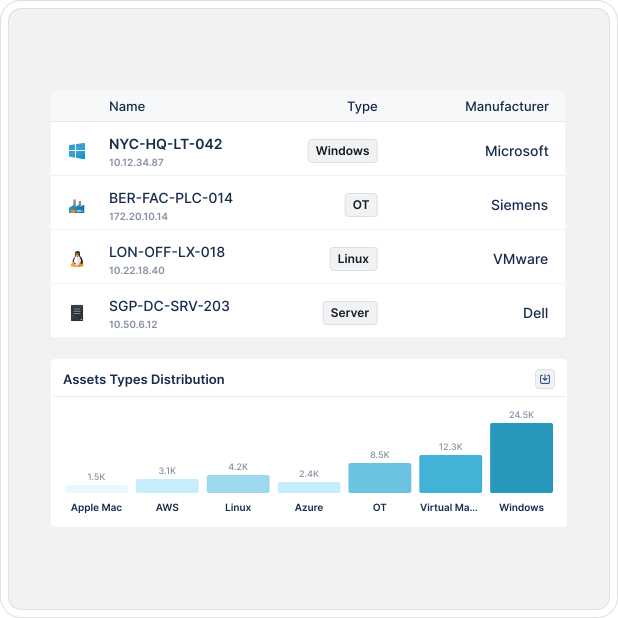
Lansweeper discovers every asset across IT, OT, IoT, and cloud automatically, syncing enriched, deduplicated records directly into your CMDB, keeping it up to date without manual input. Every asset is identified, classified, and kept current as the environment changes, giving IT and Security a shared foundation both teams can act on without first questioning whether the data is still accurate.

Enriched Context
Raw discovery data populates records, Lansweeper enriches them. Ownership, configuration state, lifecycle status, and dependency relationships are added automatically to every asset record giving incident managers, change assessors, and service teams the context needed to act immediately rather than investigate first.

ITSM Workflows
Automate CMDB data management to keep your asset record accurate and actionable, without the burden of manual upkeep. Lansweeper powers faster incident resolution, smoother change management, and automated ITSM workflows, so your service teams can spend less time chasing data and more time resolving issues with .
Real-world Value
Tackle critical IT Service Management challenges with total visibility and context needed to act with confidence.
How it works
Discover every asset, understand what’s at risk, and push trusted data to the tools that take action.


Continuously discover and classify every asset across IT, OT, cloud, and IoT, including managed, unmanaged, and shadow assets without manual effort.
Normalize and apply context, vulnerability data, and lifecycle signals to assess risk, forecast spend, and surface optimization opportunities.
Deliver trusted asset intelligence to ITSM, CMDB, and security tools so actions are accurate, scoped, and prioritized.
INTEGRATIONS
Lansweeper feeds trusted, continuously updated asset intelligence into the tools that take action.







Explore Lansweeper for free.
No credit card required.
A Configuration Management Database (CMDB) is a centralized repository that stores information about the IT assets, called configuration items (CIs), in an organization’s environment, and the relationships between them. CMDBs support IT service management by providing the asset context that incident, change, problem, and release management processes depend on. A CMDB is only as useful as the data inside it, and most CMDBs suffer from drift: data that was accurate at implementation but becomes stale as the environment changes.
CMDB drift is the gap that opens between what a CMDB records and what’s actually deployed in the environment, as data grows stale over time. New devices get added, configurations change, and assets are decommissioned, but manual updates and periodic imports can’t keep pace. Left unaddressed, drift leads to incorrect impact analysis, failed changes, and slower incident resolution, and it widens the gap between what IT can act on and what Security can trust. Lansweeper prevents drift by continuously discovering and validating asset data across IT, OT, and cloud environments, so CMDB records stay current without manual reconciliation.
CMDB data drifts because most organizations populate their CMDB through manual entry, periodic imports, or agent-based discovery that misses devices that don’t support agents. As assets are added, changed, and decommissioned, the CMDB falls behind. Teams work from inaccurate CI records, which leads to incorrect impact analysis, failed changes, and slower incident resolution. Lansweeper solves CMDB drift by continuously discovering and validating asset data across the environment and automatically pushing accurate, enriched CI records into the CMDB.
Lansweeper is the continuously validated asset intelligence foundation that keeps CMDB data accurate. It connects to leading CMDB platforms, including ServiceNow, and continuously feeds them with validated asset data discovered from the live environment. Rather than relying on manual updates or periodic imports, Lansweeper’s agentless discovery detects new assets, configuration changes, and decommissioned devices as they happen, so CI records stay current without manual reconciliation.
CMDB population is the initial process of loading asset data into a CMDB. CMDB enrichment is the ongoing process of keeping that data accurate, complete, and contextually useful as the environment changes. Most organizations can populate a CMDB; the hard problem is enrichment: maintaining accuracy after go-live. Lansweeper addresses both by automating initial discovery and continuously validating asset data against the live environment, so the CMDB reflects reality rather than a historical snapshot.
An accurate CMDB enables faster incident resolution because teams can immediately identify affected assets and their relationships, without manual investigation. It improves change management by surfacing downstream dependencies before changes are made. It supports compliance and audit readiness by providing a traceable record of configuration state over time. And it reduces duplicated effort across IT and Security teams who would otherwise maintain separate asset records. Lansweeper provides the continuous discovery layer that makes all of this reliable.