Lansweeper gives security and IT teams continuously validated asset intelligence across the entire cyber estate, connecting vulnerability management and remediation so exposure gets closed before it becomes an incident.
Uncover hidden vulnerabilities across your network with Lansweeper’s comprehensive asset visibility.
Tailor risk management to your needs with customizable prioritization. Address the most critical threats first for maximum protection.
Streamline risk reduction with seamless integration into your existing tools. Mitigate vulnerabilities swiftly and effectively.
Stay on top of vulnerability resolution and keep your security posture strong with security-focused audit reports.

Asset Visibility
Lansweeper automatically discovers every connected asset across your hybrid environment before vulnerability scanning begins. IT, OT, IoT, and cloud devices are identified and continuously validated, so unmanaged endpoints, shadow IT, and rogue devices are never invisible to your security program.
Vulnerability Identification
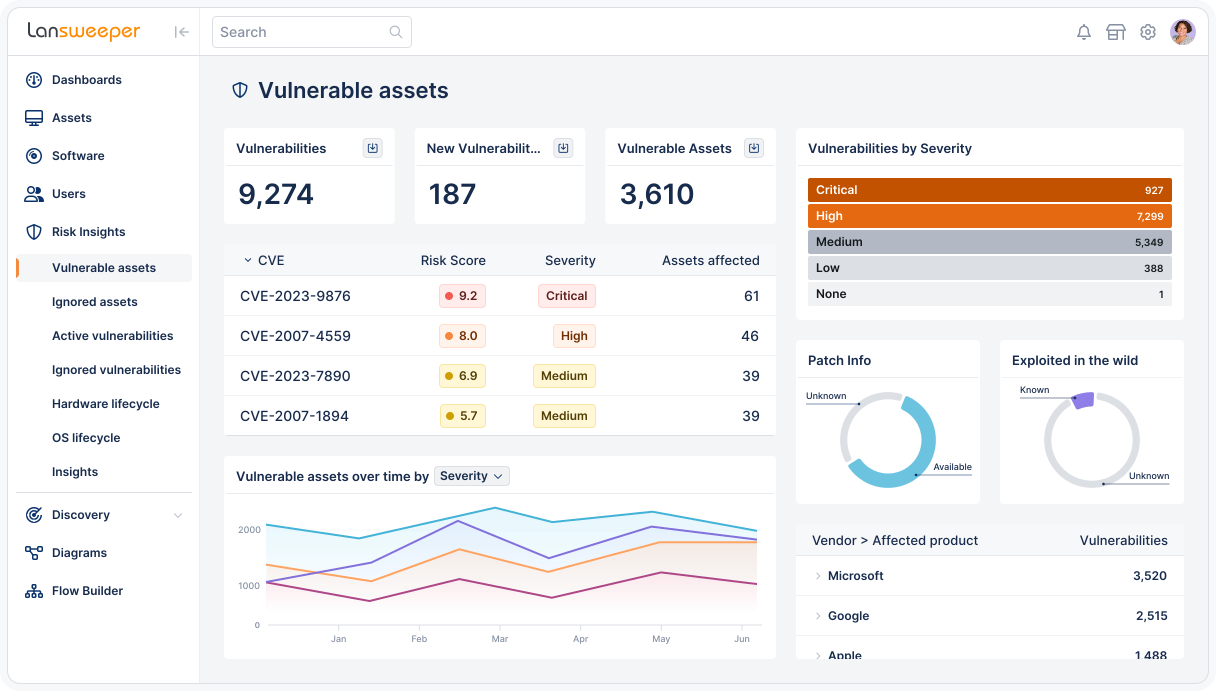
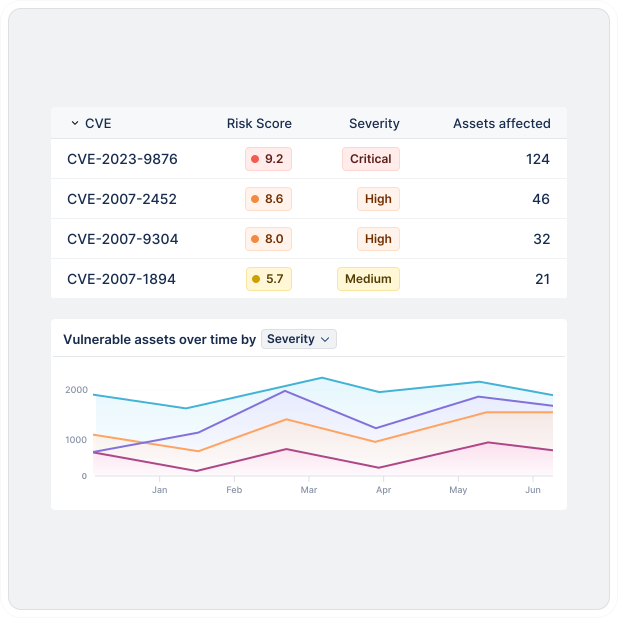
Lansweeper cross-references your full asset inventory against trusted vulnerability sources including VulnCheck, MSRC, and CISA. Risk Insights surfaces affected devices with severity, exploitability, and patch data, so your team reduces exposure time and acts before threats escalate.

Risk-Based Prioritization
Context changes everything. Lansweeper prioritizes vulnerabilities using severity, exploitability, patch availability, and real-world business impact, not just CVSS scores. Default dashboards and custom views keep teams focused, reducing mean time to resolution without requiring manual triage on every finding.

Peer Benchmarking

Compliance
ISO 27001, NIST, and CIS require accurate vulnerability detection and risk assessment, not point-in-time snapshots. Lansweeper’s continuously validated asset inventory satisfies that requirement, with audit-ready reports that document your organization’s posture and reduce the manual work of framework compliance.

Orchestration
Lansweeper connects directly with your ITSM, SIEM, SOAR, and CMDB platforms to enrich workflows and trigger automated actions, from patch deployment to service ticket updates.
How it works
Discover every asset, understand what’s at risk, and push trusted data to the tools that take action.


Continuously discover and classify every asset across IT, OT, cloud, and IoT, including managed, unmanaged, and shadow assets without manual effort.
Normalize and apply context, vulnerability data, and lifecycle signals to assess risk, forecast spend, and surface optimization opportunities.
Deliver trusted asset intelligence to ITSM, CMDB, and security tools so actions are accurate, scoped, and prioritized.
INTEGRATIONS
Lansweeper feeds trusted, continuously updated asset intelligence into the tools that take action.






Explore Lansweeper for free.
No credit card required.
Vulnerability management is the ongoing process of identifying, assessing, prioritizing, and remediating security vulnerabilities across an organization’s IT environment. It typically involves scanning for known CVEs, ranking findings by severity, and tracking remediation to closure. Effective vulnerability management depends on having an accurate, complete inventory of assets, because vulnerabilities that can’t be tied to a specific, verified asset owner cannot be reliably prioritized or remediated.
Incomplete asset inventories are the most common reason vulnerability management programs generate more work than they close. When asset data is inaccurate or stale, security teams spend time reconciling findings against unknown or misattributed assets, chasing ghost devices, and manually verifying scope before remediation can begin. Lansweeper’s continuous, agentless discovery eliminates this overhead by maintaining an always-current, trusted asset record so the vulnerability management workflow starts with accurate data, not a reconciliation task.
Lansweeper provides the continuously validated asset intelligence that makes vulnerability findings actionable. When a CVE is identified, Lansweeper surfaces which specific devices are affected, who owns them, what OS and software versions are running, and where they sit in the network, giving security teams the context they need to prioritize and assign remediation without manual asset lookup. This reduces the time vulnerabilities spend waiting before reaching the team that can close them. Lansweeper is trusted across 30,000+ environments for exactly this kind of asset-to-finding correlation.
Vulnerability management tools identify CVEs. Lansweeper provides the verified asset data that makes those CVEs actionable. The distinction matters: a CVE without a verified asset owner, lifecycle context, and accurate configuration data cannot be reliably remediated. Lansweeper is the shared intelligence foundation that vulnerability, ITSM, and security tools depend on, so findings don’t stall in reconciliation queues before reaching the team that can act on them.
Vulnerability management focuses on identifying and tracking known vulnerabilities, typically through periodic scanning against known CVEs. Threat Exposure Management (TEM) is broader and more continuous: it incorporates asset context, business criticality, exploitability signals, and attack path analysis to prioritize which exposures to address first. TEM also closes the loop with remediation validation, making exposure reduction measurable. Lansweeper supports TEM by providing the continuously validated asset intelligence that connects vulnerability findings to owners, business context, and verified outcomes.
Yes, vulnerability management is a required component of most major compliance frameworks, not an optional practice. Standards including ISO 27001, NIST, and CIS require organizations to demonstrate accurate vulnerability detection and risk assessment on an ongoing basis, not through point-in-time snapshots. Lansweeper’s continuously validated asset inventory satisfies that requirement directly, since every vulnerability is mapped to a verified, current asset record rather than a static list. Audit-ready reports give both IT and Security a shared, defensible view of posture over time, reducing the manual work of proving framework compliance.
A vulnerability management project should start with three questions: what assets exist across your environment, who owns each one, and how vulnerabilities will be prioritized once found. Many projects stall because scanning tools surface findings without the asset context needed to assign and act on them, leaving Security and IT to reconcile ownership manually before remediation even begins. Before choosing tools, confirm your asset inventory is complete and continuously validated, since a vulnerability tied to an unverified or unmanaged asset cannot be reliably closed. Lansweeper provides that foundation across IT, OT, IoT, and cloud environments, so the vulnerability management project you plan is grounded in accurate data from day one.