Lansweeper gives security and IT teams Cyber Asset Intelligence, so every unmanaged device is found, every exposure is tracked, and remediation moves from detection to closure without manual coordination.
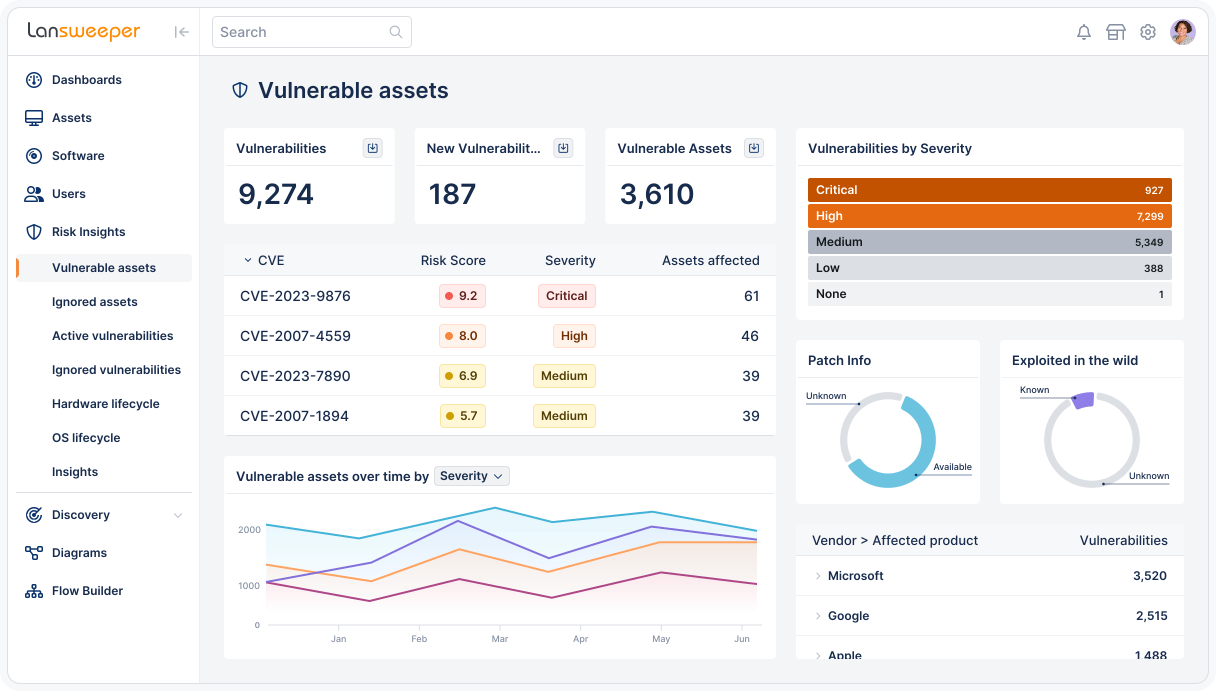
Uncover hidden vulnerabilities across your network with Lansweeper’s comprehensive asset visibility.
Tailor risk management to your needs with customizable prioritization. Address the most critical threats first for maximum protection.
Streamline risk reduction with seamless integration into your existing tools. Mitigate vulnerabilities swiftly and effectively.
Stay on top of vulnerability resolution and keep your security posture strong with security-focused audit reports.

Total Visibility
Most security tools scan what’s already registered. Lansweeper discovers what’s not. Discovery across IT, OT, IoT, and cloud surfaces unmanaged devices, shadow assets, and orphaned endpoints that standard scanning misses, including assets that appear between scans.
Discovery
Effective CAASM starts with knowing what assets you have. Lansweeper automatically discovers and inventories all network-connected devices, including rogue, unmanaged, and shadow IT assets, providing a comprehensive and up-to-date asset inventory. This complete visibility is crucial for identifying and mitigating potential security risks.
Asset Context
Lansweeper organizes and contextualizes asset data, making it actionable across various use cases. With pre-built and customizable dashboards, you can monitor patch status, vulnerability exposure, and security compliance. Integrate with Microsoft Power BI to combine asset data with other business metrics for a 360-degree view of your cyber attack surface.
Risk Insights
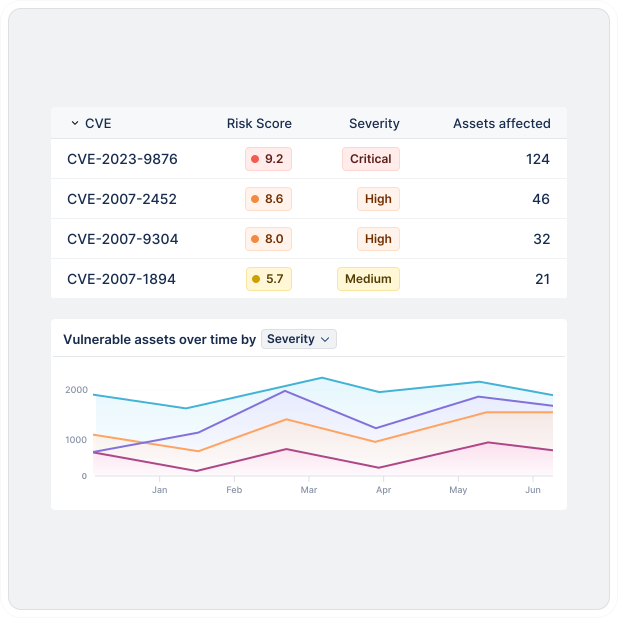
Discovered assets are enriched with vulnerability data, lifecycle status, and software version context. Risk Insights maps CVEs to normalized device records, surfaces exploitability and patch status, and identifies which exposures are most likely to be weaponized. Ownership is assigned automatically.

Orchestration
There is no single tool that can do it all, so we focus on what we do best – detecting, and identifying assets on the network. But, we are open and interoperable by design. This ensures that all operational systems have access to the most up-to-date asset data, eliminating silos and reducing operational overhead in security incident investigation and remediation.
White Paper
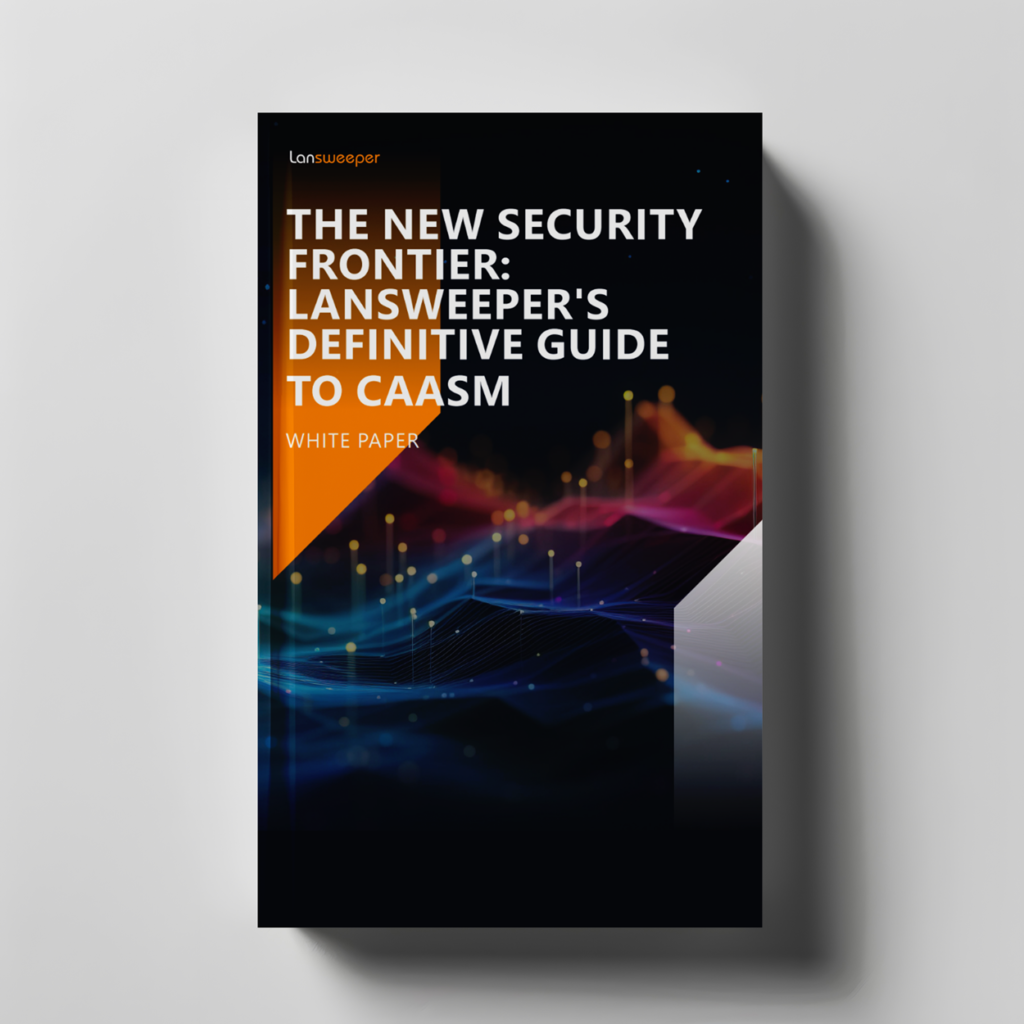
Managing complex environments and expanding attack surfaces is critical in an ever-evolving IT landscape. Our Definitive Guide to CAASM dives deep into the essential Cyber Asset Attack Surface Management (CAASM) strategies.
Discover how CAASM can revolutionize your approach to cybersecurity, ensuring comprehensive visibility and control over your IT assets.
How it works
Discover every asset, understand what’s at risk, and push trusted data to the tools that take action.


Continuously discover and classify every asset across IT, OT, cloud, and IoT, including managed, unmanaged, and shadow assets without manual effort.
Normalize and apply context, vulnerability data, and lifecycle signals to assess risk, forecast spend, and surface optimization opportunities.
Deliver trusted asset intelligence to ITSM, CMDB, and security tools so actions are accurate, scoped, and prioritized.
INTEGRATIONS
Lansweeper feeds trusted, continuously updated asset intelligence into the tools that take action.






Explore Lansweeper for free.
No credit card required.
Cyber Asset Attack Surface Management (CAASM) is a security discipline focused on gaining complete visibility into all assets that make up an organization’s attack surface, including managed and unmanaged devices, cloud resources, OT systems, and third-party connections, and continuously identifying and reducing the exposures those assets represent. CAASM integrates data from existing security and IT tools to give security teams a trusted, accurate view of what is exposed and why it matters.
CAASM depends on knowing exactly what assets exist, who owns them, and what their security posture is. Most organizations struggle because their asset inventory is incomplete, missing unmanaged devices, BYOD endpoints, OT systems, and cloud resources that aren’t captured by agent-based tools. Without a complete asset inventory, CAASM tools surface vulnerabilities tied to assets that can’t be attributed, prioritized, or remediated reliably. Lansweeper provides the continuous asset discovery foundation that CAASM depends on, covering managed and unmanaged environments without requiring agents on every device.
Lansweeper is the shared asset intelligence foundation that CAASM depends on. It provides a continuously validated inventory of every device, workload, and connection across IT, OT, IoT, and cloud environments, including assets that don’t support agents: OT systems, BYOD devices, network infrastructure, and unmanaged endpoints. Security teams use this trusted data to reduce false positives, improve prioritization, and ensure remediation targets the right assets, without reconciling conflicting data sources.
Vulnerability management identifies and tracks known vulnerabilities: CVEs against a set of assets. CAASM is broader. It focuses on the entire attack surface, including misconfigurations, shadow IT, unmanaged assets, and exposure from third-party connections, not just CVEs. CAASM also incorporates business context and asset criticality to prioritize which exposures matter most. Vulnerability management is one input into CAASM, but CAASM requires complete, continuously validated asset data to be effective.
Lansweeper discovers IT assets (desktops, laptops, servers, cloud instances, virtual machines), OT assets (industrial controllers, SCADA systems, PLCs), IoT devices (smart building systems, cameras, connected infrastructure), network devices (switches, routers, firewalls), and software, including installed applications, browser extensions, SaaS usage, and AI tools. Coverage is agentless for most device types and extends to unmanaged and BYOD devices via network-level scanning. The result: a continuously validated view of the full attack surface that IT and Security share.