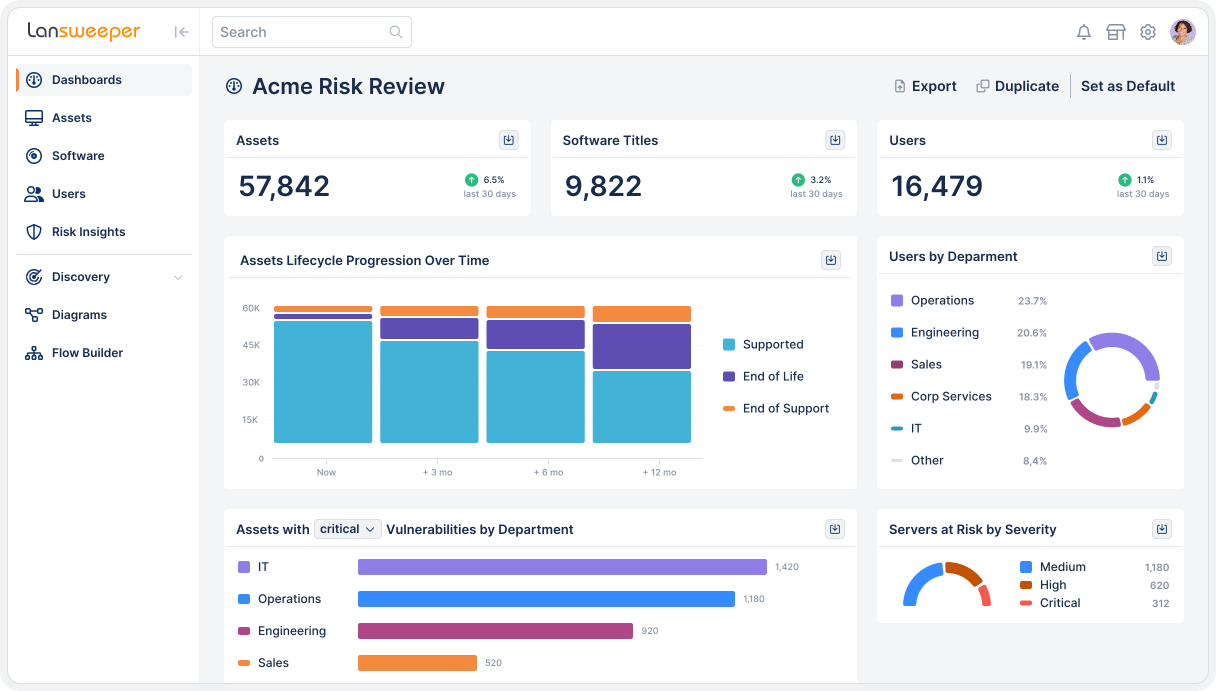
End-of-life hardware, unsupported software, and aging infrastructure create risk that compounds quietly. Lansweeper gives IT and Security continuously validated lifecycle intelligence across the entire cyber estate, so replacement decisions are planned, not forced.

Risk Prevention
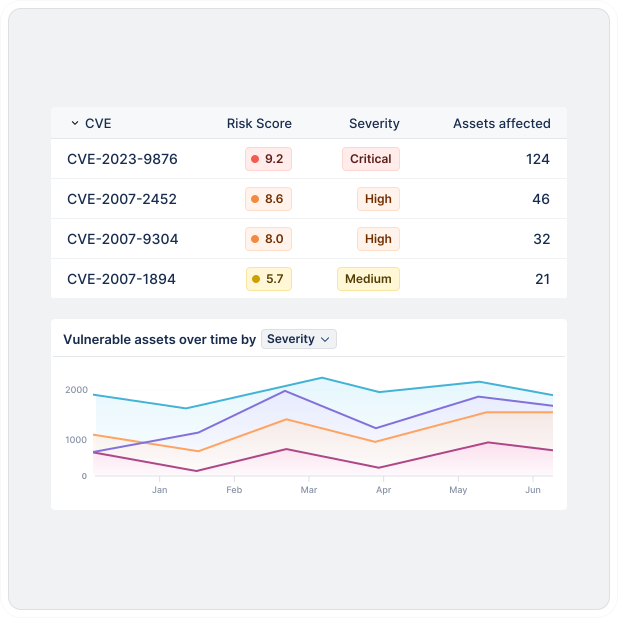
Unsupported assets don’t announce themselves as vulnerabilities. They accumulate quietly until a missed patch, an expired support contract, or a failed audit makes them visible. Lansweeper cross-references manufacturer data to surface end-of-life hardware and end-of-support software automatically, giving IT teams time to retire or replace assets before security has to flag them as risk.

ROI Optimization
Not every aging asset needs immediate replacement, and not every replacement request has the data to justify it. Lansweeper tracks warranty status, lifecycle stage, and support timelines across the entire estate, so upgrade decisions are based on current intelligence rather than estimates.
Operational Efficiency
Manual tracking slows everyone down. Lansweeper centralizes lifecycle data into one continuously validated inventory. IT gets the operational context needed for planning. Security gets the risk context needed for prioritization. Both teams pull from the same source, and both teams trust what they’re seeing.
“With Lansweeper, we don’t have to guess. We have full visibility into our IT estate, helping us plan upgrades smarter and faster.”
Strategic Planning
Reactive replacements are expensive. Planned ones are not. Lansweeper gives IT the foresight to align asset retirement and procurement cycles with broader business objectives — reducing downtime, avoiding emergency spend, and ensuring infrastructure keeps pace with what the business needs next.

Orchestration
Lifecycle data is only actionable when it reaches the tools your teams already work in. Lansweeper connects with ITAM, ITSM, CMDB, and security platforms to push continuously validated EOL and EOS context directly into existing workflows.
How it works
Discover every asset, understand what’s at risk, and push trusted data to the tools that take action.


Continuously discover and classify every asset across IT, OT, cloud, and IoT — managed, unmanaged, and shadow — without manual effort.
Normalize and apply context, vulnerability data, and lifecycle signals to assess risk, forecast spend, and surface optimization opportunities.
Deliver trusted asset intelligence to ITSM, CMDB, and security tools so actions are accurate, scoped, and prioritized.
INTEGRATIONS
Lansweeper feeds trusted, continuously updated asset intelligence into the tools that take action.






Explore the full platform, free for 14 days.
No credit card required.
IT asset lifecycle management is the practice of tracking and managing technology assets from procurement through retirement, covering acquisition, deployment, maintenance, refresh planning, and decommissioning. The goal is to ensure assets remain secure, compliant, and operationally efficient throughout their life, and that organizations replace or retire assets before they become security liabilities or operational risks. Without lifecycle visibility, IT teams discover EOL assets during audits or after incidents, not before.
Lansweeper automatically discovers all connected assets and tracks their end-of-life (EOL) and end-of-support (EOS) dates using manufacturer data, for both hardware and software. Teams can see which assets are approaching EOL, which have already passed it, and what the security and compliance implications are for each. This enables proactive refresh planning and budget forecasting rather than reactive procurement when assets fail or become audit findings.
Assets past their end-of-life date no longer receive security patches or firmware updates, making them permanently vulnerable to known exploits. Compliance frameworks including ISO 27001, SOC 2, and NIS2 require organizations to demonstrate that assets in their environment are maintained and patched. EOL assets that are undiscovered or untracked represent both a security exposure and a compliance gap. Lansweeper surfaces EOL assets continuously so teams can remediate before a vulnerability scan or audit makes it urgent.
Proactive lifecycle management reduces costs in several ways: it prevents emergency hardware purchases by giving IT teams advance notice of assets approaching EOL so replacements can be budgeted on schedule. It identifies underutilized assets available for reallocation before new hardware is purchased. It improves software license management by tracking which installations are active versus idle. And it reduces the security remediation costs that come from EOL assets that become incident vectors. Lansweeper’s lifecycle tracking gives procurement and IT finance teams the trusted data they need to plan proactively.
Lansweeper’s lifecycle data, including EOL/EOS dates, warranty status, hardware age, and utilization patterns, integrates with ITSM platforms and CMDB systems to inform procurement workflows, decommissioning tasks, and change management processes. Teams can configure alerts for assets approaching lifecycle milestones, automate decommissioning workflows, and maintain a continuously updated record of asset age and status that supports budget planning and refresh cycle decisions without manual data collection.