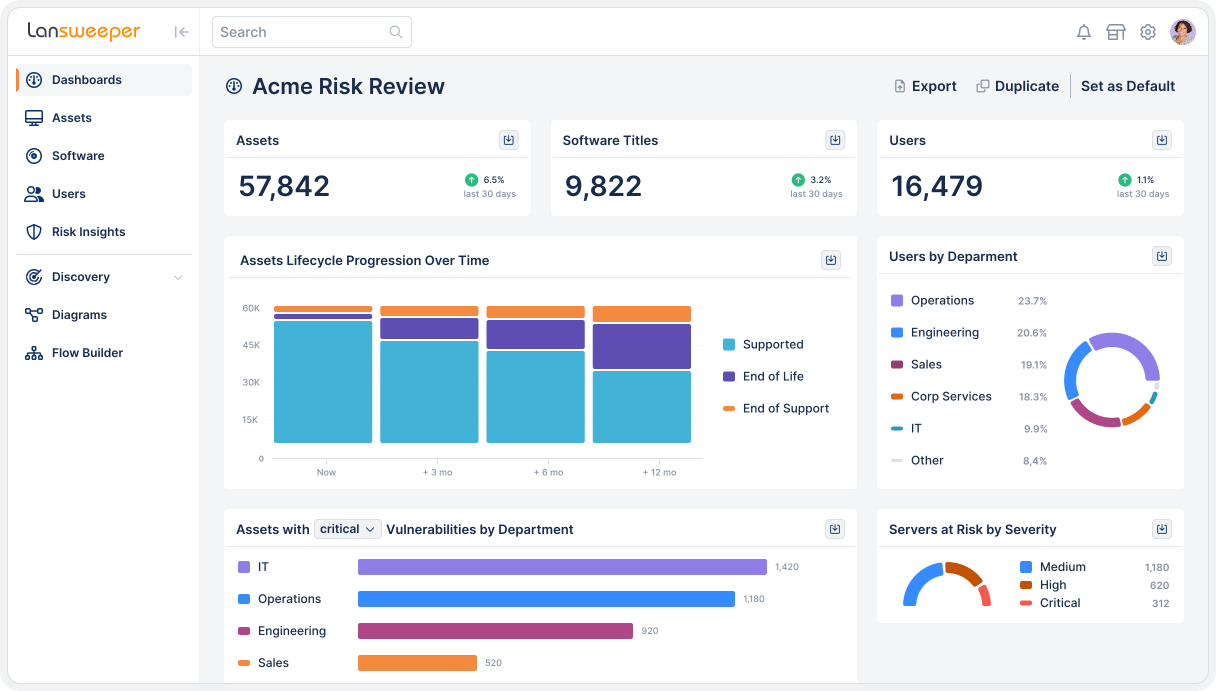
Software sprawl is expensive, hard to audit, and a growing security risk. Lansweeper’s software inventory management software continuously discovers and validates every installed application, giving IT and Security the accurate software intelligence needed to reduce spend and close compliance gaps.

Complete Visibility
Lansweeper’s software inventory management software continuously scans your entire environment to detect every installed application across on-premises, cloud, and hybrid infrastructure. Software naming is standardized, data is enriched with context, and the result is a complete, deduplicated software inventory both IT and Security can trust as a shared foundation.

Cost Optimization
Real usage tracked against entitlements surfaces unused, duplicate, and underutilized software across the entire estate. Lansweeper gives IT the data needed to rightsize allocations, avoid over-purchasing, and negotiate renewals from a position of strength, backed by continuously validated usage intelligence, not estimates assembled before the renewal deadline.

Compliance
Proactively identify gaps, misalignments, unauthorized installs, and generate reports that satisfy auditors, without the last-minute scramble. Lansweeper runs your software inventory program continuously, cross-referencing discovered software against licensing data and vendor contracts year-round, not once at renewal, so you stay compliant and avoid fines and reputational damage.
Risk Insights
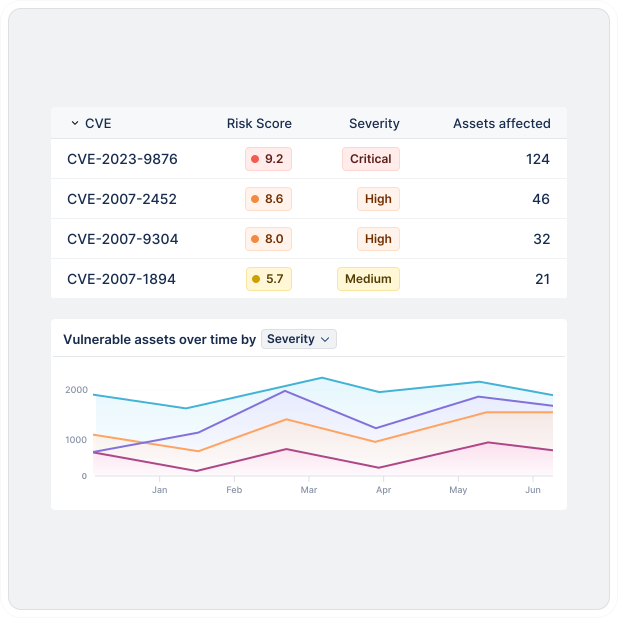
Outdated or unpatched applications are a top attack vector. Lansweeper’s risk insights correlates software versions with known vulnerabilities to provide you with an actionable list of active threats against your network. This way you can prioritize remediation efforts where they are needed most based on exploitability, severity, and exposure.

AI Usage Tracking
Shadow AI is a growing software governance gap. Lansweeper detects AI service connections, locally installed AI applications, browser extensions, and IDE plugins across every device. Every finding is tied to a specific device, user, and risk classification, giving IT and Security the context needed to enforce AI usage policy on accurate, continuously validated data.

SAM Orchestration
Lansweeper connects software asset intelligence directly into the platforms your teams already work in, from SAM and ITSM tools to security and procurement workflows.
How it works
Discover every asset, understand what’s at risk, and push trusted data to the tools that take action.


Continuously discover and classify every asset across IT, OT, cloud, and IoT, including managed, unmanaged, and shadow assets without manual effort.
Normalize and apply context, vulnerability data, and lifecycle signals to assess risk, forecast spend, and surface optimization opportunities.
Deliver trusted asset intelligence to ITSM, CMDB, and security tools so actions are accurate, scoped, and prioritized.
INTEGRATIONS
Lansweeper feeds trusted, continuously updated asset intelligence into the tools that take action.







Explore Lansweeper for free.
No credit card required.
Software Asset Management (SAM) is the practice of discovering, inventorying, and managing all software across an organization, including installed applications, SaaS subscriptions, and cloud-based software, to control costs, maintain license compliance, and reduce security risk from unauthorized or outdated software. Effective SAM requires accurate, continuously updated software discovery: not just what was purchased, but what is actually installed and in use across the environment.
Lansweeper automatically identifies all installed software across managed endpoints, including applications, version numbers, installation dates, and publisher data, without requiring agents on every device. It also surfaces software usage patterns, helping IT teams distinguish between actively used applications and software that is installed but idle. This gives procurement and IT teams the trusted data they need to right-size licenses, avoid renewal of unused software, and maintain an audit-ready software inventory without manual data collection.
Lansweeper compares discovered software installations against license entitlements to identify over-deployment, unauthorized software, and unlicensed installations before they become audit findings. By continuously monitoring the software estate rather than performing periodic point-in-time audits, organizations can address compliance gaps proactively, reducing the risk of vendor audit penalties and ensuring every installation is tracked, attributed, and accounted for. This is particularly important for high-cost licenses from vendors like Microsoft, Adobe, and Oracle.
IT asset management (ITAM) covers the full lifecycle of both hardware and software assets. Software asset management (SAM) is a discipline within ITAM focused specifically on software: licenses, entitlements, usage, and compliance. While ITAM provides the broader operational and financial picture, SAM goes deeper into the licensing and compliance layer that creates the most audit risk and procurement cost. Lansweeper supports both: hardware and software are discovered together in a single continuously validated inventory, giving teams a unified view without managing separate tools.
Most organizations rely on periodic software audits, conducted quarterly or annually, against an inventory that was accurate at the time of the last scan. Software changes constantly: employees install applications, versions update automatically, SaaS subscriptions expand, and licenses are reallocated without central visibility. By the time an audit occurs, the inventory is stale. Continuous software discovery with Lansweeper means the audit-ready record is maintained in real time, not assembled under time pressure when a vendor requests it.
Lansweeper identifies SaaS application usage and cloud-based software connections alongside installed software, giving IT and procurement teams a more complete picture of software spend than tools that only cover installed applications. This matters because software consumption has shifted: many licenses today don’t leave an installation footprint on the endpoint, making them invisible to traditional SAM approaches. Lansweeper surfaces this usage and ties it to specific devices and users.