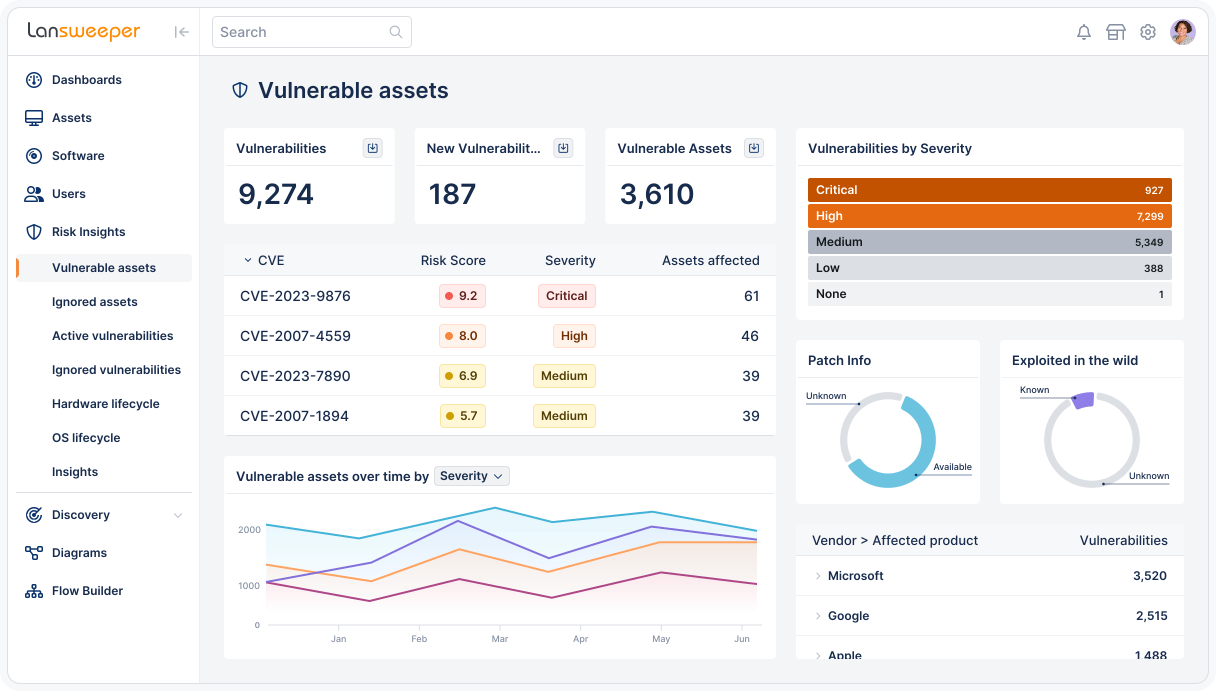
Lansweeper gives Security Leaders a shared, continuously validated foundation. Controls scale effectively and risk reduction remains consistent, demonstrable, and defensible as the organization evolves.
How it works
Discover every asset, understand what’s at risk, and push trusted data to the tools that take action.
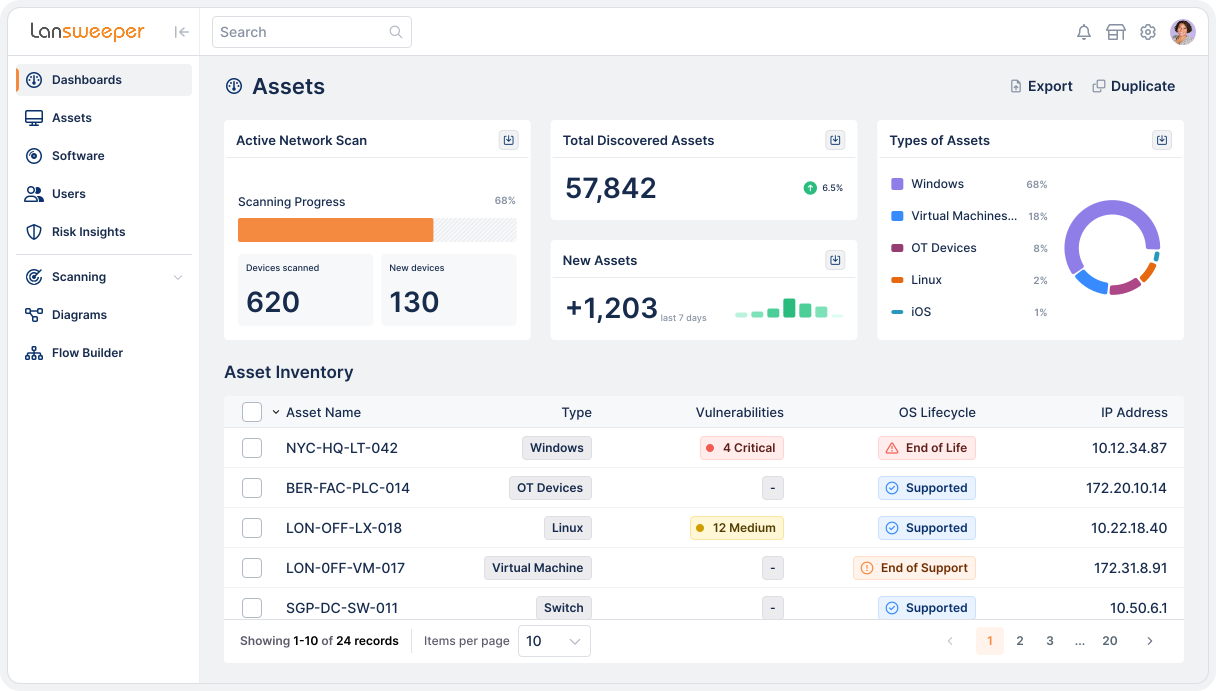


Continuously discover and classify every asset across IT, OT, cloud, and IoT — managed, unmanaged, and shadow — without manual effort.
Normalize and apply context, vulnerability data, and lifecycle signals to assess risk, forecast spend, and surface optimization opportunities.
Deliver trusted asset intelligence to ITSM, CMDB, and security tools so actions are accurate, scoped, and prioritized.
INTEGRATIONS
Lansweeper feeds trusted, continuously updated asset intelligence into the tools that take action.





















Explore the full platform, free for 14 days.
No credit card required.
Lansweeper continuously validates asset and coverage data, so Security Leaders can show controls are consistently protecting the environment across audit cycles, not just report point-in-time activity that’s hard to verify later.
Findings usually stall when Security and IT work from different, disconnected asset data. Lansweeper gives both teams a shared, continuously updated foundation, so findings move directly into IT workflows with clear ownership instead of stalling at the handoff.
NIS2 requires organizations to implement appropriate technical and operational measures to manage cybersecurity risks, and to demonstrate those measures when supervisory authorities ask. Lansweeper provides the continuously validated asset intelligence that makes this possible: complete discovery across IT, OT, IoT, and cloud environments, patch status, encryption, and configuration states, and on-demand audit-ready reporting that holds up under external examination.
Lansweeper isn’t a security tool reporting what it’s configured to see. It continuously and independently validates every asset across the environment, so Security Leaders can confirm coverage claims instead of taking a single tool’s word for it.