


On paper, AI governance looks solid. Organizations have policies, approved tools, internal guidelines, and in some cases formal committees overseeing AI adoption. But none of this answers the question that actually matters:
What AI tools are being used right now across your environment, by real employees on real devices? For most organizations, the honest answer is: they do not know. Effective AI governance starts with closing that visibility gap, not writing more policy.
Real AI governance isn’t just a policy framework. It’s an operational control system that requires continuous visibility into how AI is actually being used across every device, user, and environment.
A 2026 IBM Institute for Business Value study with Oxford Economics, based on 2,000 CIOs and CTOs across global enterprises, found that two-thirds of technology leaders are now accountable for AI systems they cannot fully see or control.
Separately, Gartner® research found that only 8% of midsize organizations have comprehensive AI governance in place. We believe the gap between accountability and actual governance capability is where most programs break down. AI is moving faster than the systems meant to govern it, and the distance between policy and reality keeps growing. AI is moving faster than the systems meant to govern it, and the distance between policy and reality keeps growing.
Without it, governance is not a control system. It is an assumption layer.
Most organizations believe AI governance is a matter of defining rules: what is allowed, what is restricted, and what requires approval.
But AI does not behave like traditional software.
It does not always get installed. It does not always get logged. And it rarely stays inside approved environments.
Employees are already using AI in ways that bypass governance entirely:
Most of this isn’t malicious. It’s productivity-driven.
But it creates a structural problem: AI governance tools only see what they were told to look for. That means governance frameworks often reflect intended usage, not actual usage.
When governance is built on incomplete data, it becomes impossible to enforce consistently or prove during audits.
Use case
Discover where AI runs, how it’s used, and where risk exists.
AI governance challenges rarely come from lack of strategy. They come from blind spots in execution.
Shadow AI is not an edge case anymore. It is standard behavior. The same Gartner® research found that “72% of midsize enterprises report evidence or suspicion of employees using prohibited unauthorized public GenAI tools that don’t comply with organizational policy”.
Employees use AI tools because:
But from a governance perspective, this creates a major issue: usage happens outside visibility boundaries.
Contractors, personal devices, and BYOD environments are often excluded from formal discovery. Yet these are exactly where AI tools are frequently used. If governance only covers managed endpoints, it is only covering part of reality.
Most discovery systems were built for installed software inventory. AI doesn’t always look like installed software.
It looks like:
So while the tools are active, they are invisible in traditional inventories.
Security tools may detect traffic to AI services, but they cannot answer governance questions like:
This is where governance breaks down: visibility exists, but it lacks meaning.
Modern AI governance requires an operational layer that connects policy to real-world activity.
That layer must include:
Not a static list of approved tools, but a living inventory of:
Organizations must understand interactions with:
Including:
The EU AI Act introduces structured obligations around:
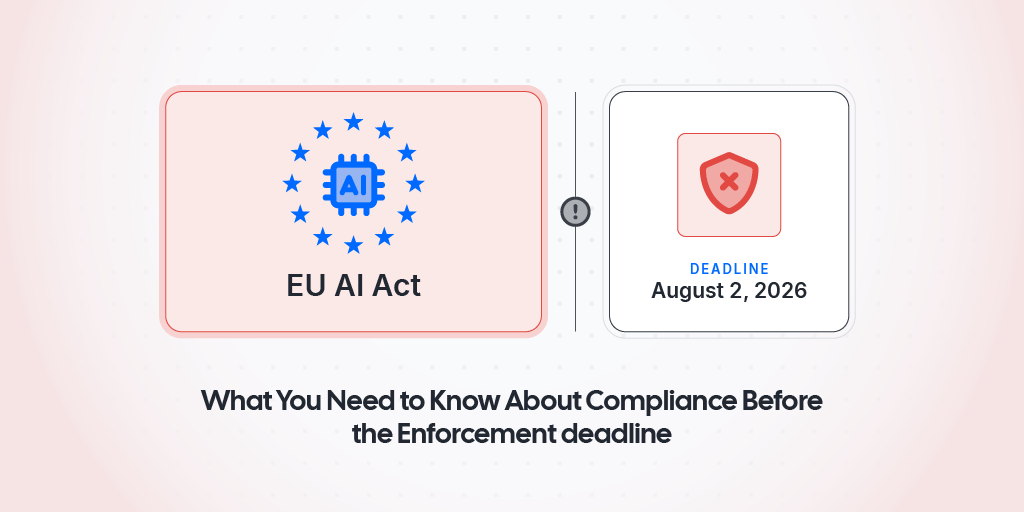
The core requirements for high-risk AI systems become applicable on August 2, 2026. For organizations that haven’t yet established visibility into what AI is running across their environment, that deadline is closer than it looks. Gartner® predicts that by 2027, AI governance will be a requirement across all sovereign AI laws and regulations worldwide.
Without visibility, compliance becomes reactive rather than continuous.
Governance must constantly answer:
Governance is no longer just internal control. It is external accountability.
That means producing:
This is where AI governance software must evolve beyond policy tracking into operational intelligence.
Lansweeper provides the visibility foundation that enables this shift by connecting AI usage directly to assets, users, and devices.
Most organizations already have governance frameworks. What they lack is a control layer that reflects reality. Governance defines intent. Control verifies execution. Without control, governance becomes:
This is the central reason AI governance initiatives fail at scale. You cannot govern what you cannot see. And right now, most organizations cannot see:
This is where visibility becomes the foundation of all governance maturity. Lansweeper acts as this control layer by building a unified asset inventory that extends into real AI usage signals across the environment.
AI governance does not need to start with complexity. It starts with visibility and alignment.
Start by identifying where AI is actually being used:
This is the baseline for any governance model.
Once visibility exists, classify usage:
This step often reveals the biggest gap. What is approved rarely matches what is actually used.
AI adoption is not static as new tools appear constantly through:
Without continuous monitoring, governance becomes outdated quickly.
Modern governance must be provable. That requires traceability across:
AI governance is often framed around frameworks, policies, and controls. But inside most organizations, the real issue is simpler: governance cannot see what it is trying to manage.
As AI spreads into browsers, SaaS tools, extensions, and developer workflows, traditional governance loses its anchor. Policies stay static while usage evolves in real time, making enforcement and validation increasingly unreliable.
This is why AI governance failures are rarely about intent. They are about missing visibility into real AI activity.
The shift required is clear:
At its core, this is not just a governance challenge. It is an operational control issue across security, compliance, and IT.
Because AI is now part of the broader technology estate, and it cannot be governed without being fully visible.
Lansweeper has been solving the asset visibility problem since before AI governance became a regulatory and operational requirement. The underlying problem has remained consistent. In the context of AI, that gap is now immediate, measurable, and directly tied to risk, compliance, and decision-making quality across the enterprise.
You can’t control AI if you can’t see it. Lansweeper’s AI usage tracking and Traffic Sensor capabilities provide the operational foundation AI governance has been missing, not as an additional governance layer, but as the visibility layer everything else depends on:
Network-level monitoring for unmanaged devices, BYOD, and contractor machines closes the last remaining visibility gap where agent-based deployment is not possible. Traffic Sensor picks up every unmanaged device the moment it starts communicating on your network.
On its own, governance defines intent. But intent without visibility does not scale in environments where AI is already embedded in browsers, SaaS platforms, and everyday tools.
What Lansweeper enables is not just monitoring, but continuity. It provides a continuously updated view of how AI is actually being used across the organization, not how it was designed to be used on paper.
Lansweeper Demo
Sit back and dive into the Lansweeper interface & core capabilities to learn how Lansweeper can help your team thrive.
AI governance is the framework of policies, processes, and controls used to manage how AI systems are used across an organization. It covers risk management, compliance, transparency, and responsible usage of AI tools and systems.
AI governance is difficult because most organizations cannot see all AI activity. Shadow AI, browser-based tools, and embedded AI features in SaaS applications operate outside traditional discovery and monitoring systems, creating blind spots.
Shadow AI refers to the use of AI tools, models, or embedded AI features without organizational approval, oversight, or visibility. In practice, this includes anything from accessing a public tool like ChatGPT or Claude through a browser to running local AI models on a work device or using AI features embedded inside approved SaaS platforms. Because most of this activity requires no installation, it rarely shows up in standard software inventory or spend tools, and it creates compliance risk, data exposure, and governance gaps that most organizations can’t see until it’s too late.
AI governance defines the rules and policies for AI usage, while AI control ensures those rules are actually followed through real-time visibility into AI activity across devices, users, and systems.
Organizations can detect shadow AI by monitoring endpoint activity, browser usage, SaaS interactions, and unmanaged devices. The goal is to identify AI usage wherever it occurs, not just within approved systems.
The EU AI Act introduces requirements for risk classification, transparency, and documentation of AI systems. Organizations must be able to identify where AI is used, especially in high-risk scenarios, and provide evidence of compliance.
Effective AI governance requires real-time visibility into AI usage, continuous monitoring of shadow AI, classification of AI systems by risk, and the ability to generate audit-ready evidence tied to users, devices, and activity.
Source: Gartner®, Inc., “How to Achieve the Minimum Viable AI Governance,” Alys Woodward, 26 January 2026.
GARTNER is a trademark of Gartner, Inc. and/or its affiliates.
Blog

Explore the full platform, free for 14 days.
No credit card required.