Software Asset Lifecycle Management moves faster when your inventory is complete, normalized, and connected to risk context.
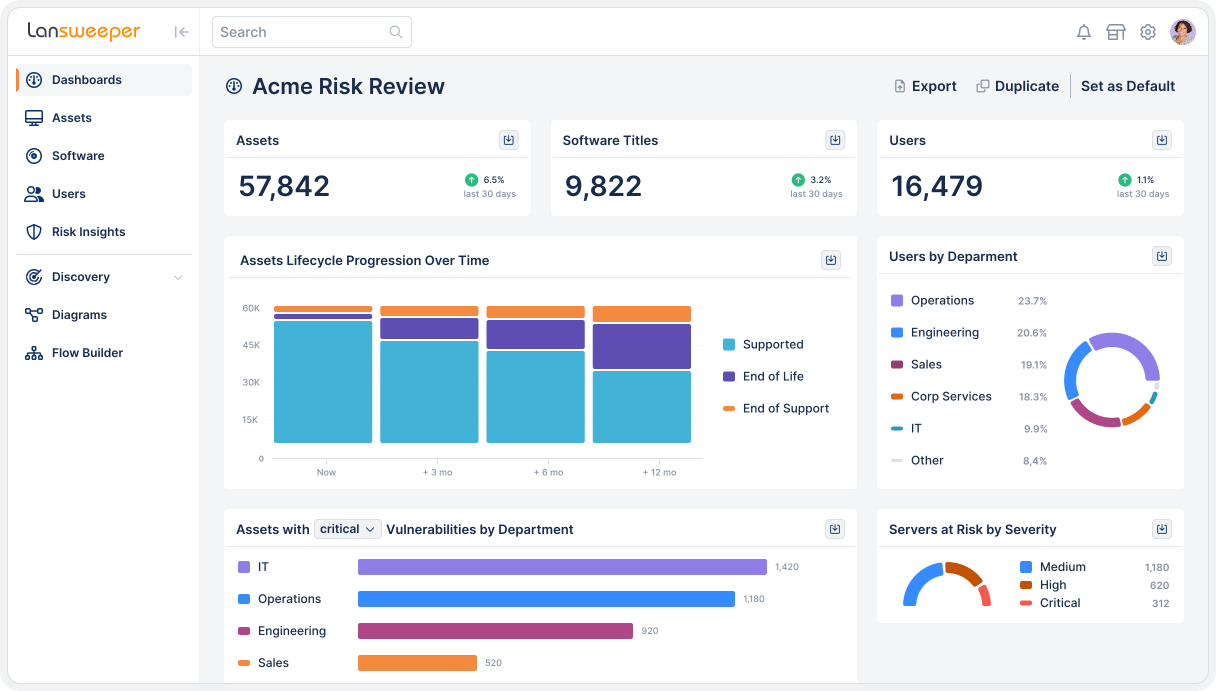
Track software from deployment through end-of-life with a normalized, continuously updated software inventory.
Identify vulnerable, outdated, and unsupported software early to prioritize upgrades and reduce operational risk.
Trigger deployment, remediation, and retirement workflows using trusted software intelligence across your tech stack.

Total Visibility
Incomplete inventories make every lifecycle decision harder. Lansweeper automatically discovers software across IT, OT, IoT, and cloud, normalizing and deduplicating data into one authoritative inventory. Every team works from the same accurate, continuously updated software foundation.

Lifecycle Intelligence
Reacting to end-of-life software is expensive. Lansweeper supplies lifecycle stage, end-of-support, and end-of-life context for operating systems and third-party software, combined with Risk Insights vulnerability data, so teams plan upgrades and replacements before they’re forced to.

Actionable Analytics
With flexible dashboards, reports, and custom views, Lansweeper supports audits and analysis across every lifecycle phase. From deployment to optimization, maintenance, and retirement, tailor your analytics to internal policies, regulatory requirements, or vendor audits without any need for manual data handling.

Orchestration
Lansweeper acts as the intelligence layer for Software Asset Lifecycle Management, connecting accurate software data to the rest of your technology stack. Through its API, workflows, and wide ecosystem of integrations, Lansweeper powers automated workflows for deployment, patching, compliance checks, procurement triggers, and decommissioning.
How it works
Discover every asset, understand what’s at risk, and push trusted data to the tools that take action.


Continuously discover and classify every asset across IT, OT, cloud, and IoT, including managed, unmanaged, and shadow assets without manual effort.
Normalize and apply context, vulnerability data, and lifecycle signals to assess risk, forecast spend, and surface optimization opportunities.
Deliver trusted asset intelligence to ITSM, CMDB, and security tools so actions are accurate, scoped, and prioritized.
INTEGRATIONS
Lansweeper feeds trusted, continuously updated asset intelligence into the tools that take action.






Explore Lansweeper for free.
No credit card required.
Software Asset Lifecycle Management (SALM) is the practice of managing software from acquisition through deployment, optimization, maintenance, and retirement. Effective SALM gives organizations complete visibility into what software exists, where it runs, what it costs, and what risk it carries so teams can control licensing exposure, reduce security vulnerabilities, and demonstrate compliance throughout the software lifecycle. Without a reliable, continuously updated software inventory, SALM depends on manual processes that break down at scale.
Lansweeper automatically discovers, normalizes, and enriches software data across on-prem, cloud, OT, and hybrid environments. It creates a complete, continuously validated software inventory. Each title is enriched with lifecycle stage, end-of-support dates, vulnerability context, and ownership data. This supports every phase of Software Asset Lifecycle Management: from deployment and optimization through risk remediation and secure retirement. All without manual data gathering or spreadsheet reconciliation.
Unsupported, vulnerable, or unauthorized software is one of the most common sources of preventable security incidents and compliance failures. Effective Software Asset Lifecycle Management ensures every software title is visible, classified, and assessed against lifecycle and risk context, so security teams can prioritize remediation, compliance teams can produce defensible audit evidence, and IT teams can plan upgrades before end-of-support forces emergency action.
Lansweeper connects to ITSM platforms, vulnerability management tools, patch management systems, and security tooling through native integrations, Flow Builder, and open APIs.
Accurate software intelligence flows automatically into deployment, patching, procurement, and decommissioning workflows, so lifecycle actions are triggered by trusted data rather than manual requests. Every workflow step is traceable, reducing handoffs and improving both speed and accountability across the software lifecycle.