Lansweeper gives ITSM teams continuously validated asset intelligence that flows directly into every service workflow, so processes run on accurate data, SLAs are protected, and improvement compounds over time.
Process Efficiency
Service processes are only as reliable as the data feeding them. Lansweeper continuously validates every asset across the environment, pushing current ownership, configuration, and criticality context directly into service workflows. Tickets route correctly, priorities reflect reality, and the manual corrections are replaced by processes that work as designed.

Unified Visibility
Siloed asset data means different teams reach different conclusions, slowing every service process. Lansweeper gives IT a shared inventory that eliminates the reconciliation overhead between systems that should already agree. Service teams, change managers, and operations all pull from the same foundation, making every cross-team workflow faster and more reliable.
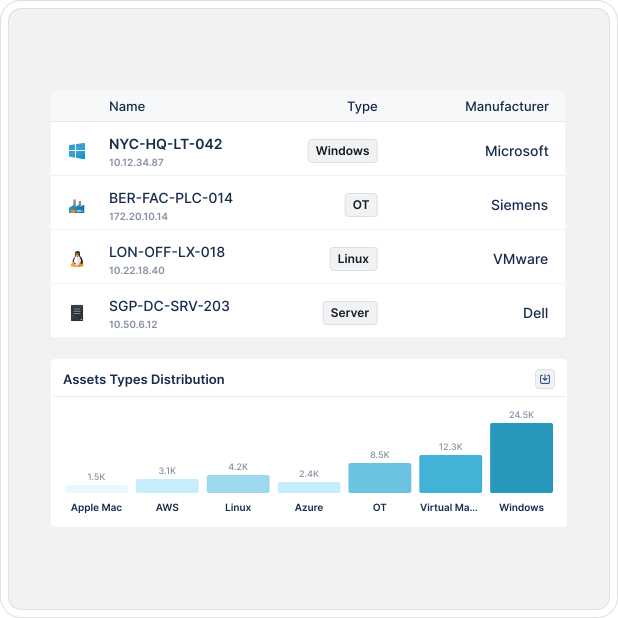
Automated Discovery
Asset records enriched with configuration history, dependency context, and criticality data mean service workflows do more than route tickets. They auto-prioritize based on what’s actually at risk, diagnose root causes faster, and surface recurring issues before they escalate.


Process Optimization
Change management, incident response, and service delivery workflows are monitored and refined over time using data teams can trust: improving consistency, accountability, and SLA performance across every service process without relying on manually assembled reports that are outdated before they’re acted on.
How it works
Discover every asset, understand what’s at risk, and push trusted data to the tools that take action.


Continuously discover and classify every asset across IT, OT, cloud, and IoT — managed, unmanaged, and shadow — without manual effort.
Normalize and apply context, vulnerability data, and lifecycle signals to assess risk, forecast spend, and surface optimization opportunities.
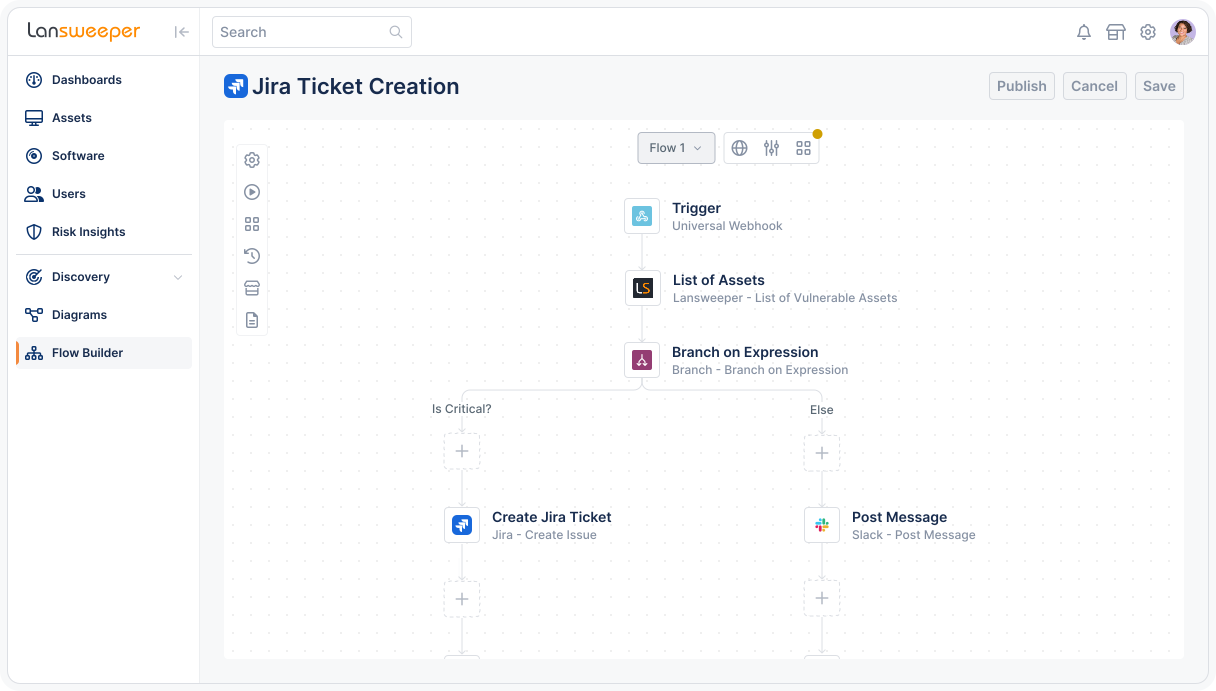
Deliver trusted asset intelligence to ITSM, CMDB, and security tools so actions are accurate, scoped, and prioritized.
INTEGRATIONS
Lansweeper feeds trusted, continuously updated asset intelligence into the tools that take action.








Explore the full platform, free for 14 days.
No credit card required.
IT service process management refers to the design, execution, and continual improvement of workflows that support IT service delivery such as incident response, change management, and service request fulfillment. Its goal is to ensure these processes run efficiently, consistently, and in alignment with business objectives.
Effective service process management helps IT teams reduce delays, avoid manual errors, and meet service-level agreements (SLAs). It also improves visibility, accountability, and resource allocation across departments, especially as IT environments grow more complex.
At Lansweeper, we support IT service process management by delivering real-time, accurate asset intelligence that integrates with your ITSM stack. This helps organizations automate workflows, eliminate silos, and drive continuous improvement through data-driven insights.
Service process management supports ITIL by ensuring workflows for incident, problem, change, and request management are standardized, measurable, and continuously improved. It helps organizations follow ITIL principles like efficiency, accountability, and service quality across all IT operations.
Strong service process management reduces delays, eliminates manual errors, improves SLA performance, and enhances the user experience. It gives IT teams better visibility and control, and the ability to scale service delivery as environments expand and become more complex.