Enrich every Incident Detection and Response workflow with accurate, continuously validated asset context so your team can scope faster, prioritize accurately, and contain threats without blind spots.
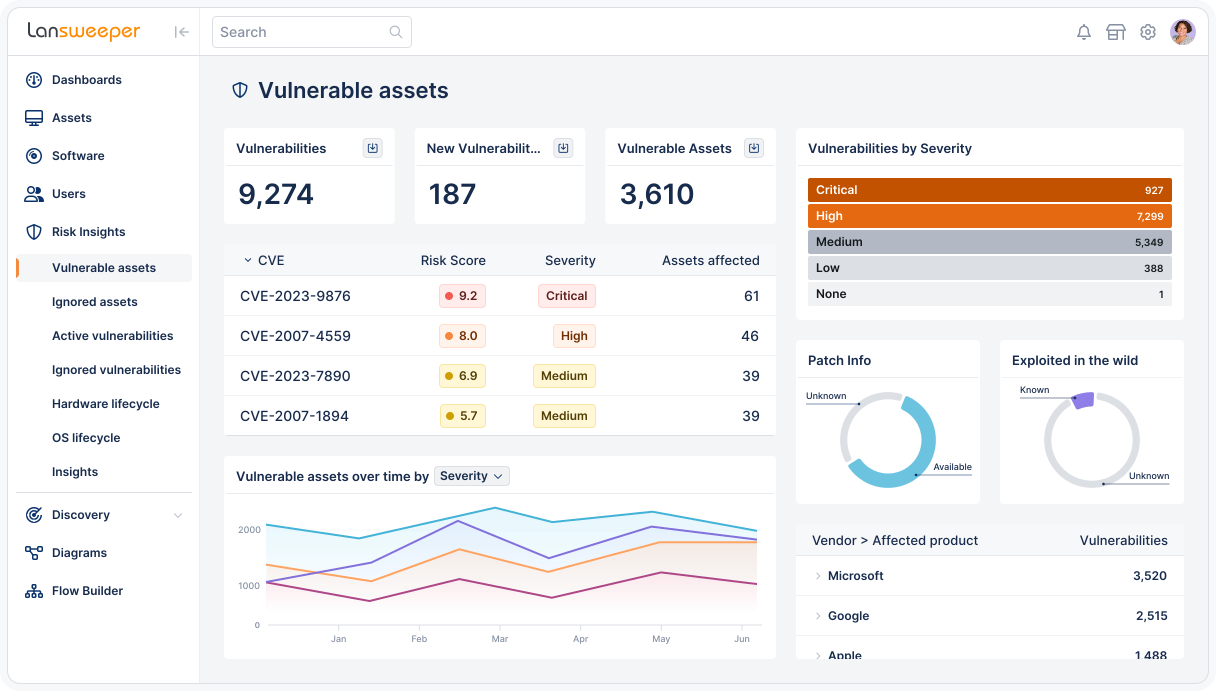
Uncover hidden vulnerabilities across your network with Lansweeper’s comprehensive asset visibility.
Tailor risk management to your needs with customizable prioritization. Address the most critical threats first for maximum protection.
Streamline risk reduction with seamless integration into your existing tools. Mitigate vulnerabilities swiftly and effectively.
Stay on top of vulnerability resolution and keep your security posture strong with security-focused audit reports.

Total Asset Coverage
Incomplete scoping is how incidents escalate. Lansweeper automatically discovers every asset across IT, OT, IoT, and cloud, including unmanaged and remote devices, so responders immediately know what exists, what’s affected, and what needs containment.

Asset Context
Incomplete scoping is how incidents escalate. Lansweeper automatically discovers every asset across IT, OT, IoT, and cloud, including unmanaged and remote devices, so responders immediately know what exists, what’s affected, and what needs containment.
Faster Risk Reduction
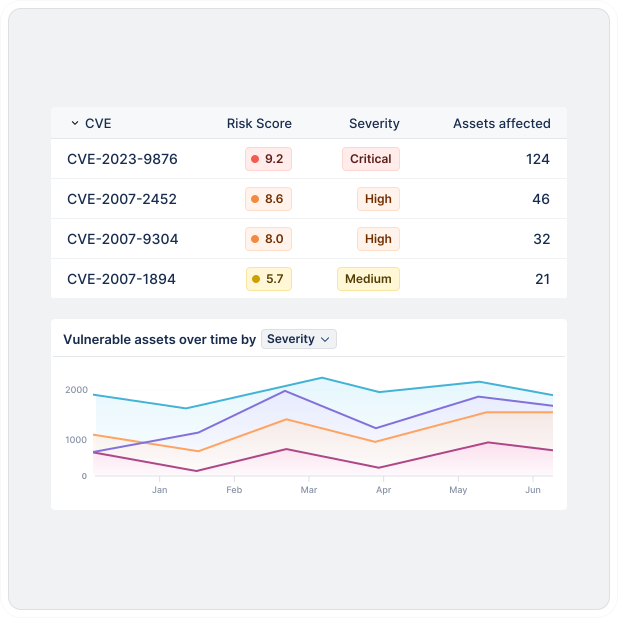
Drawing information from reliable sources, Lansweeper enriches assets with vulnerability data, exploit signals, reachability, ownership, and business criticality. With this crucial asset context, security teams can prioritize and focus on the small set of exposures that will most meaningfully shrink attack paths, aligning with operational reality.

Historic Insights
Understanding what changed before an incident is as important as containing it. Lansweeper retains historical asset state (configuration changes, software updates, device introductions) so teams can pinpoint root causes, support compliance reporting, and strengthen detection playbooks.

Orchestration
Lansweeper feeds validated asset context directly into Microsoft Sentinel, Splunk, IBM QRadar, Palo Alto Cortex XSOAR, and more. Flow Builder and open APIs trigger remediation workflows, enrich incident tickets, and coordinate patching, turning asset intelligence into coordinated action without manual handoffs.
How it works
Discover every asset, understand what’s at risk, and push trusted data to the tools that take action.


Continuously discover and classify every asset across IT, OT, cloud, and IoT, including managed, unmanaged, and shadow assets without manual effort.
Normalize and apply context, vulnerability data, and lifecycle signals to assess risk, forecast spend, and surface optimization opportunities.
Deliver trusted asset intelligence to ITSM, CMDB, and security tools so actions are accurate, scoped, and prioritized.
INTEGRATIONS
Lansweeper feeds trusted, continuously updated asset intelligence into the tools that take action.






Explore Lansweeper for free.
No credit card required.
Effective Incident Detection & Response depends on knowing exactly what exists in your environment, who owns it, and what’s running on it. Without that context, scoping is slow, prioritization is guesswork, and containment is incomplete.
Lansweeper provides the continuously validated asset intelligence that IDR platforms depend on: enriching alerts with hardware, software, vulnerability, ownership, and lifecycle data so response teams can act with precision from the first moment of an incident.
Every incident response action depends on knowing what assets are involved. Without complete, accurate asset visibility, responders risk missing affected systems during scoping, misidentifying root causes, and leaving gaps in containment. Lansweeper ensures every asset, including unmanaged, OT, and cloud resources, is visible, contextualised, and available to response teams the moment an incident begins.
Yes. Lansweeper integrates natively with leading SIEM platforms including Microsoft Sentinel, Splunk, and IBM QRadar, SOAR platforms including Palo Alto Cortex XSOAR, and ITSM tools. Flow Builder enables automated workflow triggers based on asset events, and a flexible API allows custom integrations across your full Incident Detection & Response ecosystem, without replacing any existing tooling.
The biggest driver of slow MTTR is time lost gathering context that should already be available. Lansweeper eliminates that friction by providing instant, enriched visibility into every affected asset (including ownership, criticality, vulnerabilities, and configuration state). Triage moves faster, prioritization is based on actual business impact, and containment workflows trigger automatically through native integrations with SIEM, SOAR, and ITSM platforms.