Lansweeper gives IT continuously validated intelligence across every hardware, software, and lifecycle dimension, so infrastructure upgrade management is planned, not forced.
“Lansweeper helps us to proactively manage the IT infrastructure as it expands, without needing additional resources. The solution is more efficient, more reliable and more cost-effective than previous solutions, and enables us to do more with less.”

“We immediately see devices, unsupported operating systems, and patch statuses to budget for upgrades.”

Current State Assessment
Before any upgrade can be planned, the current state of the environment needs to be accurate and trusted. Lansweeper continuously discovers every asset across IT, OT, IoT, and cloud — hardware, software, configurations, and lifecycle status — giving IT the complete picture needed to identify gaps, dependencies, and priorities before planning begins.

Lifecycle Intelligence
Lansweeper cross-references hardware and software against manufacturer lifecycle data continuously, surfacing end-of-life and end-of-support assets automatically. IT gets early warning on what needs replacing and when, so upgrade cycles are planned around accurate timelines rather than discovered during incidents.
Security and Compliance
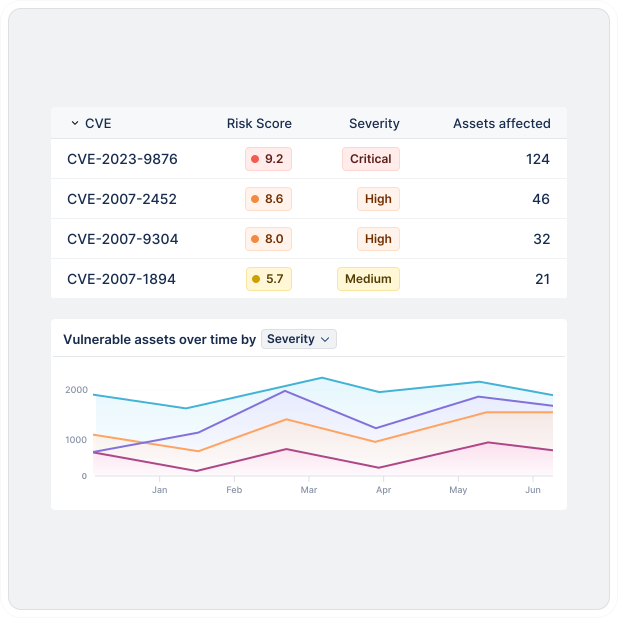
End-of-life hardware, unpatched software, and shadow IT identified automatically gives IT and Security a shared picture of where risk sits across the environment. A maintained view of configurations, licenses, and patch status means compliance with regulatory frameworks is provable at any point.

TCO Planning
Lansweeper provides the lifecycle, cost, and usage data needed to calculate total cost of ownership accurately across the full estate. IT and finance teams get the intelligence needed to align upgrade spending with long-term business objectives. Replace assets proactively rather than reactively, and forecast investments with confidence.
How it works
Discover every asset, understand what’s at risk, and push trusted data to the tools that take action.


Continuously discover and classify every asset across IT, OT, cloud, and IoT — managed, unmanaged, and shadow — without manual effort.
Normalize and apply context, vulnerability data, and lifecycle signals to assess risk, forecast spend, and surface optimization opportunities.
Deliver trusted asset intelligence to ITSM, CMDB, and security tools so actions are accurate, scoped, and prioritized.
INTEGRATIONS
Lansweeper feeds trusted, continuously updated asset intelligence into the tools that take action.






Explore the full platform, free for 14 days.
No credit card required.
Infrastructure upgrade management involves assessing, planning, and executing updates to an organization’s IT systems, including hardware, software, networks, and operational technology. This process ensures systems remain secure, compliant, cost-efficient, and aligned with business goals. Key steps include analyzing the current state, defining future objectives, and implementing tools to streamline upgrades while minimizing risks and disruptions.
IT infrastructure upgrades often encounter issues like fragmented data silos, shadow IT, compliance hurdles, and visibility gaps in costs and ROI. Addressing these challenges requires integrated asset discovery, centralized data platforms, and automated workflows for compliance and upgrades. These solutions enable informed decision-making and seamless transitions.