Managing IT assets and delivering IT services are often treated as separate functions, but keeping them siloed creates inefficiencies, higher costs, and unnecessary complexity. Integrating IT Asset Management (ITAM) with IT Service Management (ITSM) eliminates those barriers by creating a unified system where asset data informs every service decision. The result: faster incident resolution, optimized resource allocation, and improved service quality. In this blog, we’ll explore how ITAM–ITSM integration drives operational efficiency and why it’s becoming essential for modern IT operations.
Discover how organizations are transforming service delivery and efficiency with Lansweeper.
What Does ITAM and ITSM Integration Mean?
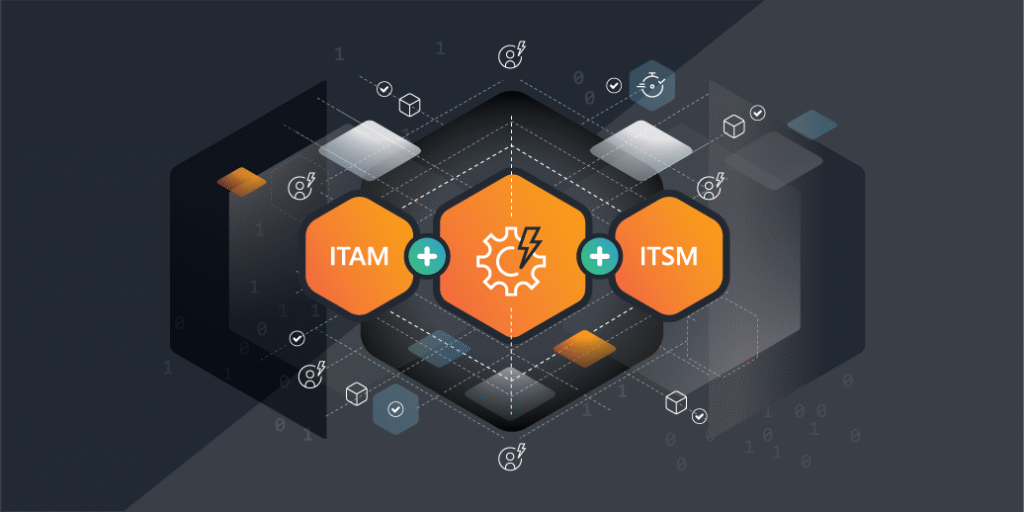
By integrating IT Asset Management and IT Service Management into a unified system that tracks assets while managing service delivery you can create a single source of truth where asset data directly informs service decisions, enabling faster incident resolution and better resource optimization.
When these systems work together, IT teams can instantly access complete asset information during service requests, automatically trigger maintenance based on asset conditions, and maintain comprehensive visibility across their entire technology landscape. The result is streamlined operations that reduce costs while improving service quality.
Why Should IT Teams Integrate ITAM with ITSM?
Operational Efficiency Gains
Integration eliminates the manual data transfers and communication gaps that slow down IT operations. Service desk agents can access asset configuration details, warranty information, and maintenance histories directly within service tickets, reducing resolution time by up to 40%.
Key efficiency improvements include:
- Faster incident resolution through immediate asset data access
- Automated workflows that trigger based on asset conditions
- Reduced data entry errors from manual system switching
- Streamlined change management with complete impact visibility
Cost Reduction Benefits
Organizations typically see 15-25% cost savings within the first year of integration through:
- Eliminated duplicate purchases by identifying available assets
- Optimized license usage through real-time tracking
- Reduced maintenance costs via proactive asset management
- Lower compliance penalties through automated monitoring
Research from Gartner IT Asset Management studies shows that organizations with mature ITAM practices achieve significantly better cost optimization results.
Enhanced Service Quality
Integration directly improves service delivery by providing complete context for every interaction. IT teams can establish more accurate service level agreements, optimize resource allocation, and prevent issues before they impact business operations.
How Does ITAM Support IT Operations?
Asset Discovery and Inventory Management
Modern ITAM systems use automated discovery tools to maintain up-to-date visibility into network infrastructure. These tools continuously scan networks to identify new devices, track configuration changes, and monitor asset performance without manual intervention.
Core ITAM functions include:
- Hardware and software inventory tracking
- License compliance monitoring
- Cost optimization analysis
- End-of-life planning and replacement scheduling
Risk Management and Compliance
ITAM provides the foundation for maintaining security and compliance across all technology assets. By tracking software versions, security patches, and configuration standards, organizations can quickly identify vulnerabilities and ensure regulatory compliance.
What Role Does ITSM Play in Service Delivery?
Incident and Problem Management
ITSM frameworks provide structured approaches to handling service disruptions and identifying root causes. When integrated with ITAM data, these processes become significantly more effective because technicians have immediate access to asset relationships and performance history.
Key ITSM processes include:
- Incident management for rapid issue resolution
- Change management for controlled system modifications
- Problem management for root cause analysis
- Service catalog management for standardized delivery
Service Level Management
ITSM enables organizations to establish and maintain service commitments that align with business objectives. Following ITIL 4 Foundation best practices, integration with ITAM provides the asset intelligence needed to make realistic commitments and optimize resource deployment.
How to Successfully Implement ITAM and ITSM Integration
Step 1: Assess Current State and Define Goals
Begin by evaluating existing ITAM and ITSM processes to identify integration opportunities. Document current workflows, data sources, and pain points that integration could address.
Define specific goals such as:
- Reducing average incident resolution time
- Improving asset utilization rates
- Enhancing compliance scores
- Decreasing operational costs
Step 2: Standardize Data and Processes
Establish common data standards and formats across both systems. Following ISO/IEC 19770 standards for IT asset management, implement standardized naming conventions, asset classification schemes, and data validation rules to ensure consistency.
Critical standardization areas:
- Asset naming conventions across all systems
- Data classification schemes for consistent categorization
- Workflow definitions that eliminate redundancies
- Reporting formats for unified analytics
Step 3: Select Integration Technology
Choose integration platforms that support scalable, flexible operations with robust APIs and automated synchronization capabilities. Cloud-based solutions often provide the best combination of scalability, accessibility, and security.
Step 4: Implement Phased Rollout
Deploy integration in phases to minimize disruption and allow for adjustments based on user feedback. Start with high-impact, low-risk processes before expanding to more complex workflows.
What Are the Key Benefits of Integration?
Improved Asset Visibility and Control
Integration provides complete transparency into asset relationships, service dependencies, and performance metrics through unified dashboards. This visibility enables more accurate capacity planning and resource allocation decisions.
Organizations gain:
- Regular asset status updates through automated discovery
- Complete service dependency mapping for impact analysis
- Comprehensive performance metrics for optimization
- Unified vendor management with contract visibility
Enhanced Incident Resolution
Service desk agents can quickly identify affected assets, review configuration details, and access relevant documentation without navigating multiple systems. According to HDI Service Desk Standards, this enhanced efficiency extends to problem management activities where teams can analyze asset performance data to identify patterns and root causes.
Better Resource Allocation
With complete visibility into asset capabilities and performance metrics, IT teams can establish realistic service commitments and optimize resource deployment to meet those commitments consistently.
Common Integration Challenges and Solutions
1. Data Quality Issues
Challenge: Inconsistent data formats and incomplete asset information can undermine integration effectiveness.
Solution: Implement automated data validation rules and regular data cleansing processes. Use discovery tools to maintain accurate, up-to-date asset information.
2. Process Alignment Difficulties
Challenge: Existing ITAM and ITSM processes may conflict or create redundancies.
Solution: Map current workflows to identify overlap areas and redesign processes to leverage the strengths of both disciplines.
3. Technology Compatibility
Challenge: Legacy systems may not support modern integration requirements.
Solution: Evaluate integration platforms that provide robust APIs and can work with existing infrastructure while planning for future technology upgrades.
Measuring Integration Success
Track metrics that span both operational efficiency and strategic business outcomes:
- Incident resolution time (target: 20-40% reduction)
- Asset utilization rates (target: 15-25% improvement)
- Compliance scores (target: 95%+ compliance)
- Cost optimization achievements (target: 15-25% savings)
- Service level agreement compliance (target: 99%+ SLA adherence)
Regular assessment of integration effectiveness enables organizations to identify improvement areas and adjust their approach based on performance data. Using frameworks like ISACA COBIT for governance, this ensures the integration continues delivering value as business requirements evolve.
Ready to Transform Your IT Operations?
Successful ITAM and ITSM integration starts with comprehensive asset discovery and complete visibility. Lansweeper’s Technology Asset Intelligence platform provides the foundation you need to implement these strategies effectively.
With Lansweeper, you can:
- Automatically discover and inventory all network assets in real-time
- Integrate seamlessly with your existing ITSM tools and workflows
- Maintain complete visibility across your entire IT infrastructure
- Accelerate incident resolution with instant asset context and configuration details
Don’t let fragmented asset data slow down your IT operations. Experience how Lansweeper’s asset discovery platform can streamline your ITAM and ITSM integration efforts.
Lansweeper Demo
See Lansweeper in Action
Sit back and dive into the Lansweeper interface & core capabilities to learn how Lansweeper can help your team thrive.
FAQ
-
What is the difference between ITAM and ITSM?
ITAM focuses on managing the lifecycle of IT assets from procurement to disposal, while ITSM concentrates on delivering IT services that meet business needs. ITAM tracks what you have, and ITSM manages what you do with it.
-
How long does ITAM and ITSM integration typically take?
Most organizations complete basic integration within 3-6 months, though full optimization can take 12-18 months depending on system complexity and organizational readiness. Phased implementations often show benefits within the first 30-60 days.
-
What are the most common integration challenges?
The primary challenges include data quality issues, process alignment difficulties, and technology compatibility problems. Organizations that invest in proper planning and standardization typically overcome these challenges more quickly.
-
Can small organizations benefit from ITAM and ITSM integration?
Yes, even small organizations with 50-100 IT assets can benefit from integration. Cloud-based solutions make integration accessible and cost-effective for organizations of all sizes.
-
How do you measure ROI from integration?
ROI is typically measured through cost savings from reduced incident resolution time, improved asset utilization, lower compliance penalties, and decreased operational overhead. Most organizations see positive ROI within 6-12 months of implementation.