
How Cybersecurity Asset Management Improves Vulnerability Assessment
Here’s the reality: your security team can only protect what they know exists. Asset management enables you to systematically catalog everything in your environment and understand what’s most critical to your business.
This guide explores key risks of poor asset tracking, proven implementation strategies and how to focus your limited security resources where they’ll have the biggest impact.
Closing the Gaps With Automated Vulnerability Management
Why visibility is your first — and most critical — line of defense.
Download the White PaperWhy is Cybersecurity Asset Management Crucial for Vulnerability Assessment?
Cybersecurity asset management is crucial for vulnerability assessment. Because it gives you complete visibility into your IT environment, it can help you identify, prioritize, and fix security weaknesses before attackers find them. If you don’t know what’s in your network, you’re operating with dangerous blind spots that leave critical vulnerabilities undetected and unpatched.
Those forgotten servers in the storage room, the applications your marketing team installed behind your back, or the IoT devices that automatically connected to your network — they all represent potential entry points that hackers love to exploit. Every untracked asset is a vulnerability waiting to be discovered by someone with malicious intent.
Key reasons why asset management is essential for vulnerability assessment include:
- Complete visibility: Identifying all hardware, software, and network components to ensure no assets are overlooked during security assessments
- Risk prioritization: Categorizing assets by business criticality to focus vulnerability remediation efforts on the most important systems first
- Accurate threat modeling: Understanding asset relationships and dependencies to assess potential attack paths and cascading impacts
- Compliance alignment: Meeting regulatory requirements that mandate comprehensive asset inventories for security reporting and audits
- Resource optimization: Allocating security resources efficiently by focusing on high-value assets and eliminating redundant protection efforts
- Faster incident response: Quickly identifying affected systems during security incidents to accelerate containment and recovery
Industry research shows that asset management is the foundation of effective cybersecurity. You need to know what you have before you can protect it. Organizations that invest in proper asset tracking find and fix vulnerabilities 65% faster than those that don’t, and they save an average of USD 1.76 million when security incidents do occur, according to the NIST Cybersecurity Framework.
What Are the Risks of Poor Cybersecurity Asset Management?
Poor cybersecurity asset management creates significant blind spots that attackers actively exploit, leading to financial losses, compliance violations, and operational disruptions. Without comprehensive asset visibility, organizations face exponentially higher risks of critical cyberattacks and prolonged security incidents.
Exposure: How Do Cyber Threats Exploit Poor Asset Management?
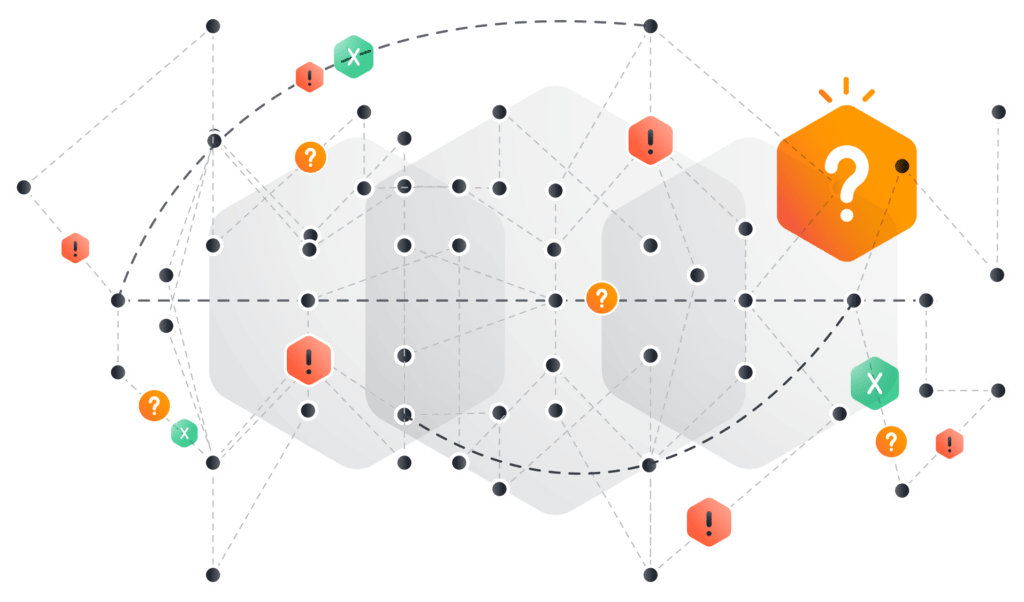
Attackers thrive on poor cybersecurity asset management. When organizations lack a comprehensive inventory, they often overlook outdated software, unpatched systems, and weak access controls. This oversight creates perfect opportunities for attackers to exploit weaknesses and launch sophisticated attacks through:
- Shadow IT assets that bypass security controls
- Orphaned systems that no longer receive security updates
- Unmanaged endpoints with default or weak credentials
- Legacy applications with known vulnerabilities
Your organization’s negligence becomes their advantage, making it easier to infiltrate systems, escalate privileges, and establish persistent access for data theft or ransomware deployment.
What Financial and Reputational Damage Results from Inadequate Asset Management?
The financial implications of inadequate asset management can be devastating. On average, a data breach costs organizations 4.4 million USD according to IBM’s 2025 Cost of a Data Breach Report, with poor asset visibility contributing to longer detection and containment times.
Your organization may face:
- Costly emergency remediation efforts and system rebuilding
- Regulatory fines from compliance violations
- Legal liabilities and lawsuit settlements
- Business interruption and lost productivity
- Customer churn and competitive disadvantage
- Increased insurance premiums and coverage restrictions
The reputational damage caused by a cyber incident can result in long-term loss of customer trust, reduced market valuation, and difficulty attracting top talent or business partnerships.
What Legal and Regulatory Consequences Arise from Neglecting Asset Management?
Regulatory bodies impose stringent requirements on organizations to maintain adequate cybersecurity controls, including comprehensive asset management. Your failure to demonstrate due diligence in asset tracking and protection can result in significant legal repercussions and compliance violations.
Key regulations requiring asset management capabilities include:
- GDPR (General Data Protection Regulation): Applies to EU member countries and any organization processing EU resident data globally
- HIPAA (Health Insurance Portability and Accountability Act): US regulation for healthcare entities handling protected health information (PHI)
- CCPA (California Consumer Privacy Act): US regulation for businesses in California or handling California resident data
- SOX (Sarbanes-Oxley Act): US regulation requiring IT controls for publicly traded companies
- PCI DSS: Global standard for organizations handling credit card data
Non-compliance penalties can range from hundreds of thousands to billions of dollars, depending on the violation severity and organization size.

What Are the Best Practices for Cybersecurity Asset Management?
Effective cybersecurity asset management requires automated discovery, continuous monitoring, and integration with broader security processes. The most successful organizations implement comprehensive asset management programs that provide real-time visibility, accurate risk assessment, and streamlined incident response capabilities.
How Should Organizations Approach Asset Discovery and Inventory Management?
Effective asset management begins with comprehensive discovery using multiple detection methods to ensure complete coverage. Organizations should deploy network scanning tools, endpoint agents, and cloud discovery solutions to automatically detect and catalog all assets within their environment.
Key implementation strategies include:
- Network-based discovery for identifying connected devices and services
- Agent-based scanning for detailed endpoint information and software inventory
- Cloud asset management for multi-cloud and hybrid environments
- Passive network monitoring to detect previously unknown assets
- Integration with CMDB systems for centralized asset tracking
Regular inventory updates ensure new assets are immediately tracked and managed appropriately, while automated workflows can trigger security assessments for newly discovered systems.
Why Is Continuous Monitoring Essential for Vulnerability Assessment?
Continuous monitoring provides real-time visibility into asset security posture and emerging threats that could impact your organization. Rather than relying on periodic assessments that create security gaps, continuous monitoring enables immediate threat detection and response.
Regular vulnerability assessments integrated with continuous monitoring help organizations:
- Identify zero-day vulnerabilities as they’re disclosed
- Track patch deployment progress across all assets
- Monitor configuration drift that could introduce new risks
- Correlate asset changes with security incidents
- Maintain compliance with evolving regulatory requirements
This approach ensures that vulnerability management remains current and effective against rapidly evolving threat landscapes.
How Should Asset Management Integrate with Incident Response and Risk Management?
Asset management must be tightly integrated with your incident response and risk management processes to enable rapid threat containment and informed decision-making. By linking comprehensive asset data with incident response protocols, your security team can quickly identify affected systems, assess potential impact, and implement targeted containment measures.
Integration benefits include:
- Faster incident scoping through accurate asset mapping
- Improved impact assessment based on asset criticality and dependencies
- Streamlined containment by identifying all related systems
- Enhanced forensics with detailed asset configuration data
- Better risk prioritization using asset value and vulnerability data
This integration also enhances risk management by providing clearer understanding of asset vulnerabilities, their business impact, and optimal mitigation strategies.
What Benefits Does Prioritizing Cybersecurity Asset Management Deliver?
Organizations that prioritize cybersecurity asset management experience significant improvements in operational efficiency, security effectiveness, and cost optimization. Research shows that companies with mature asset management programs detect breaches 200 days faster and save an average of $1.76 million in incident response costs.
Streamlined Operations and Resource Tracking
Maintaining an up-to-date asset inventory dramatically streamlines IT operations by eliminating redundant processes and ensuring optimal resource utilization. Accurate asset tracking provides complete visibility into hardware, software, and licensing, enabling better planning for upgrades, replacements, and capacity management.
Operational improvements include:
- Reduced administrative overhead through automated asset tracking
- Eliminated asset duplication and wasteful spending
- Improved change management with accurate dependency mapping
- Better capacity planning based on real-time utilization data
- Streamlined procurement through comprehensive license management
Proactive Vulnerability Management and Risk Assessment
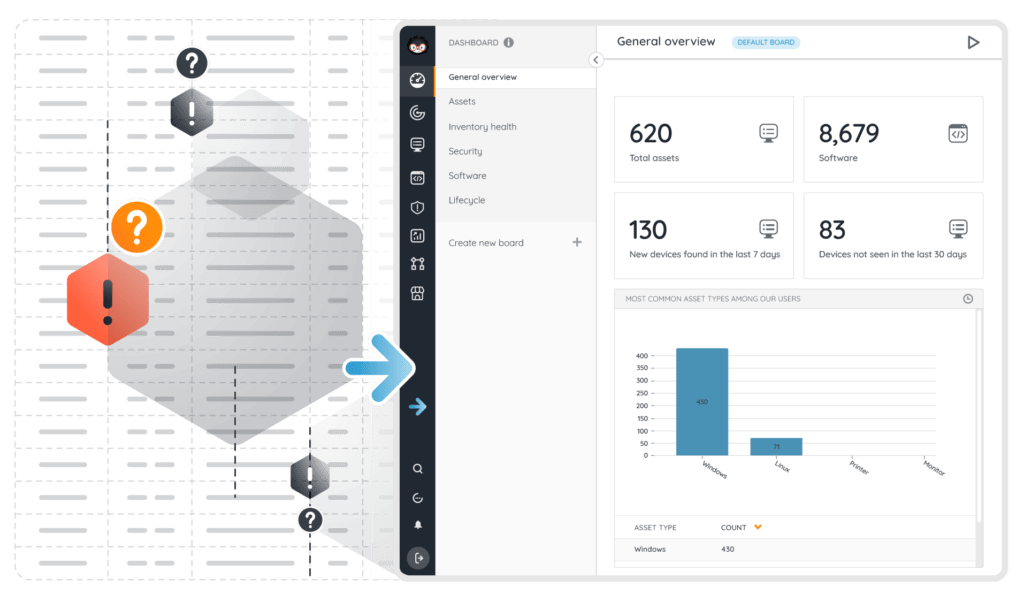
A detailed asset inventory enables proactive vulnerability management by providing the foundation for risk-based security decision-making. Understanding your complete asset landscape allows security teams to prioritize vulnerabilities based on asset criticality, exposure, and potential business impact.
Proactive benefits include:
- Risk-based vulnerability prioritization focusing on critical assets first
- Comprehensive coverage ensuring no assets are overlooked
- Faster patch deployment through accurate asset targeting
- Reduced attack surface by identifying and securing orphaned systems
- Better compliance posture through complete asset visibility
Faster Incident Detection and Response
Effective asset management enhances incident detection and response by providing security teams with precise information about affected systems, their configurations, and business importance. This detailed asset context enables faster threat identification, accurate impact assessment, and targeted response actions.
Response improvements include:
- Faster threat detection through comprehensive monitoring coverage
- Accurate incident scoping with detailed asset relationships
- Improved team coordination through shared asset intelligence
- Reduced mean time to recovery via targeted response actions
- Better post-incident analysis using complete asset forensics
Cost Benefits
Proactive asset management significantly reduces cybersecurity costs while improving overall security effectiveness. Organizations with mature asset management programs report 23% lower security operation costs and 43% faster incident resolution times.
Cost optimization areas include:
- Reduced downtime through proactive vulnerability management
- Lower recovery costs via faster incident response
- Optimized security tool investments based on actual asset needs
- Decreased compliance costs through automated reporting
- Avoided breach costs through improved threat prevention
How Do You Select the Right Asset Management Tools and Software?
Choosing appropriate asset management tools requires evaluating discovery capabilities, integration options, scalability, and total cost of ownership. The most effective solutions provide comprehensive asset visibility, seamless security tool integration, and automated workflows that reduce manual overhead while improving accuracy.
Key selection criteria include:
- Comprehensive discovery methods supporting all asset types
- Real-time monitoring capabilities for continuous visibility
- Robust integration APIs for security tool ecosystems
- Scalable architecture supporting organizational growth
- Advanced analytics and reporting for risk-based decision making
- Compliance reporting features for regulatory requirements
Leading solutions should also offer cloud-native architecture, machine learning-powered asset classification, and automated vulnerability correlation to maximize security effectiveness.

Why Lansweeper is the Right Asset Management Choice for Your Business
You can’t secure what you can’t see. Lansweeper’s Technology Asset Intelligence platform automatically discovers and maps every device across your network, eliminating dangerous blind spots that traditional tools miss, maps out their relations and interdependencies, and provides crucial vulnerability and risk information.
Our solution integrates seamlessly with your existing security infrastructure while providing real-time visibility into shadow IT and vulnerabilities.
Don’t leave your organization exposed to unknown risks. Request your free demo today and see how Lansweeper transforms your security stance in minutes, not months.
See Lansweeper in Action – Watch Our Demo Video
Sit back and dive into the Lansweeper interface & core capabilities to learn how Lansweeper can help your team thrive.
WATCH DEMO-
What is cybersecurity asset management?
Cybersecurity asset management is the systematic process of identifying, tracking, and managing all IT assets within an organization to ensure comprehensive security coverage and risk management.
-
How often should asset inventories be updated?
Asset inventories should be updated continuously through automated discovery tools, with formal reviews conducted monthly for critical environments and quarterly for standard business operations.
-
What types of assets should be included in cybersecurity management?
All IT assets should be managed, including servers, workstations, mobile devices, network equipment, software applications, cloud resources, and IoT devices.
-
Can small businesses benefit from asset management tools?
Yes, small businesses face the same cybersecurity risks and can benefit from scaled-down asset management solutions that provide essential visibility and vulnerability management capabilities.
-
How does asset management support compliance requirements?
Asset management provides the foundational visibility required for most compliance frameworks, enabling accurate reporting, risk assessment, and control implementation verification.
-
How often should vulnerability assessments be performed?
Organizations should conduct vulnerability assessments continuously rather than on a fixed schedule. Critical systems and public-facing assets should be scanned weekly or daily, while internal systems may be assessed monthly. The frequency depends on your risk tolerance, compliance requirements, and threat landscape.
-
 Cybersecurity
Stop Shadow AI Before It Stops You: A Practical AI Governance Playbook for Leaders
09/01/2026
-
%22%20transform%3D%22matrix(4%200%200%204%202%202)%22%20fill-opacity%3D%22.5%22%3E%3Cellipse%20fill%3D%22%23898a8a%22%20rx%3D%221%22%20ry%3D%221%22%20transform%3D%22rotate(-177.3%2065%2034.8)%20scale(54.47582%2058.41235)%22%2F%3E%3Cellipse%20rx%3D%221%22%20ry%3D%221%22%20transform%3D%22matrix(-68.99254%20245.48937%20-46.3654%20-13.03057%20.7%2059.8)%22%2F%3E%3Cellipse%20fill%3D%22%23979797%22%20cx%3D%22125%22%20cy%3D%2266%22%20rx%3D%2229%22%20ry%3D%2229%22%2F%3E%3Cellipse%20fill%3D%22%233a3a3a%22%20cx%3D%22231%22%20cy%3D%2256%22%20rx%3D%2252%22%20ry%3D%22255%22%2F%3E%3C%2Fg%3E%3C%2Fsvg%3E) Cybersecurity
CybersecurityNIS2 Compliance in 2026: How Lansweeper Supports Continuous Visibility and Audit Readiness
03/12/2025
-
 Cybersecurity
Faster Attack Path Mapping: DeepSurface Integrates Lansweeper for Smarter Risk Analysis
28/11/2025


Ready to get started?
You’ll be up and running in no time.
Explore all our features, free for 14 days.