⚡TL;DR Go straight to the PostgreSQL End-of-Life Audit
PostgreSQL version 14 is going end-of-life on the 12th of November, 2026. The popular open-source object-relational database system is ending support for version 14 after just over 5 years. We have added a report to your Lansweeper installation to help you find out of date installations that are in need of an update.
PostgreSQL or POSTGRES, is a popular open-source object-relational database system designed to extend SQL and contains many features to work with complex data workloads. PostgreSQL was originally started as a project of the University of California, named POSTGRES. This project started in 1986 and since then the platform has continued development. Thanks to the software being open-source, the community has driven innovation and performance throughout the years leading to a great feature set.
PostgreSQL is available for all major operating systems and received its first ACID-compliant status in 2001. Over the years it has become one of the most popular open-source IT projects.
PostgreSQL releases a new major version every year. Aside from containing bug fixes and security fixes, major versions also contain new features. In between major versions, minor versions are also released, for bug and security fixes. Minor versions are released at least once every 3 months. If an issue is deemed critical enough, a new version might be available sooner.
Major versions are supported for 5 years after the initial release date. Once the 5 year period comes to an end, one last minor version is released with fixes before the version goes end of life and is no longer supported.
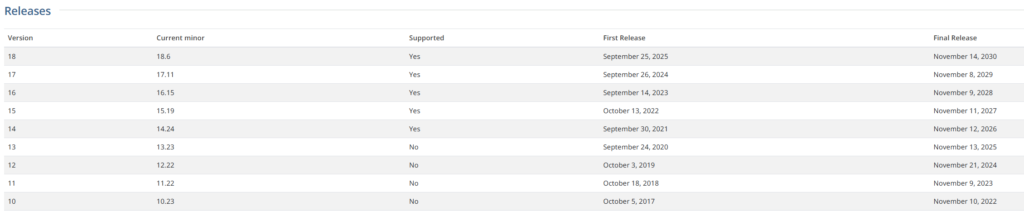
Version 14 of PostgreSQL will be going end of life on the 12th of November, 2026. From that moment on this version will no longer receive any updates are support. In order to remain supported, make sure to upgrade any installations you have in your network to version 15 or higher. The most recent release, version 18, includes several improvements and new functionalities, including but not limited to:
uuidv7() function for generating timestamp-ordered UUIDs.To check which versions of PostgreSQL you have in your IT environment, we’ve created a custom report that indicates when the versions installed in your network will be going end of life. Prevent security issues by ensuring your PostgreSQL installations are supported and get the latest security patches and updates.

Explore Lansweeper for free.
No credit card required.